Parliament passed the Value Added Tax (Amendment) Bill 2026 in under one hour on Thursday.
President Ruto assented to it on Friday.
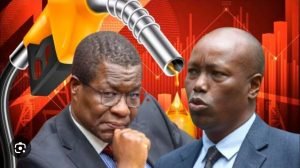
VAT on petroleum products is now cut from 16 per cent to 8 per cent for 90 days. MPs cheered. Washington did not.
The IMF had spent years demanding higher fuel taxes as a condition for Kenya’s $3.6 billion lending programme.
That programme expired in April 2025. Kenya now wants a new one. But Nairobi has just done the opposite of what the Fund requires.
The IMF has publicly described Kenya’s fuel tax cuts as “regressive, fiscally costly and distortive.”
The timing could not be worse.
The Fund’s displeasure goes deeper than the VAT cut.
Ahead of this week’s Spring Meetings in Washington, the IMF found that Kenya’s published debt statistics of Sh12.8 trillion are largely not observing international transparency standards.
The problem is structural. Kenya’s constitution defines public debt too narrowly. It covers only loans charging the Consolidated Fund.
It excludes supplier arrears — pending bills the IMF estimates at Sh684 billion, nearly 4 per cent of GDP.
That is not an accounting disagreement. It is a direct challenge to the integrity of every figure Kenya’s Treasury presents in any loan negotiation.
The KRA had already missed its nine-month revenue target by Sh84 billion as of March 2026.
Cutting petroleum VAT on a country consuming 100,000 barrels daily deepens that hole further.
Analysts warn the fiscal shortfall will make an IMF deal harder, not easier, to close.
The three-month VAT cut cushions households briefly. It solves nothing structurally.
The parliamentary process itself raises serious legal questions.
Article 118 of the Constitution requires public participation in legislation.
A Bill with nationwide fiscal consequences passed in under 60 minutes. No committee scrutiny. No economic impact analysis. No public submissions.
This is precisely the procedural shortcut that courts — including in prior COFEK litigation — have struck down.
The Amendment also removes the previous 25 per cent cap on the Treasury’s power to vary petroleum VAT.
The Cabinet Secretary can now do so by gazettement alone.
That is a constitutionally suspect delegation of the taxing power that Article 209 reserves to Parliament.
The 90-day sunset clause exposes the political architecture of the measure.
An election is 16 months away. The VAT cut buys breathing room. It does not buy structural relief.
The same MPs who introduced the Sh7 Road Maintenance Levy increment in 2024 — adding to consumer fuel costs — voted this week to reduce VAT without withdrawing that levy.
Net consumer relief is therefore considerably less than the headline figure suggests.
Buried in the parliamentary debate was the most commercially significant observation of the week.
One company has controlled between 60 and 70 per cent of Kenya’s fuel supply since the Government-to-Government procurement arrangement began.
MPs noted it lacks the depots, logistics, and storage capacity its market dominance demands.
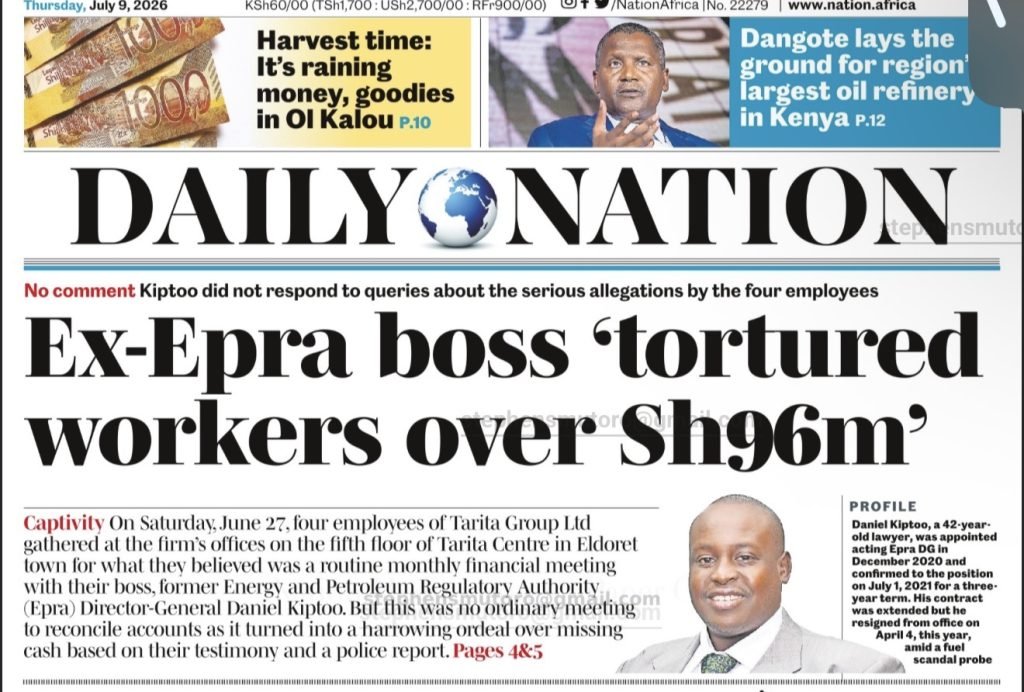
Nobody in the chamber connected that observation to the MT Paloma substandard cargo scandal, the criminal arrests of PS Liban, EPRA DG Kiptoo, and KPC MD Sang, or to COFEK’s High Court challenge over carcinogenic compounds in SICPA’s fuel marking system.
The siloes of Kenya’s legislative accountability remain intact.
Kenya is now managing three colliding crises simultaneously.
There is a sovereign lending crisis — no IMF programme without fiscal transparency and revenue measures the government has just reversed.
There is a petroleum governance crisis — criminal prosecutions, coerced resignations, substandard imports, and a toxic fuel marking system under active court challenge.
And there is a political survival crisis — an election approaching, a cost-of-living emergency, and a broad-based government held together by patronage rather than policy coherence.
The VAT cut resolves none of them. It trades fiscal credibility for temporary political relief.
Washington has already said it will not absorb that trade. The bill, in every sense, is still coming.