Screenshot
The Energy and Petroleum Regulatory Authority (EPRA) faces serious questions over procurement irregularities, governance failures, and systemic legal breaches following a damning audit report by Auditor-General FCPA Nancy Gathungu for the financial year ended 30 June 2024, signed on 27 December 2024.
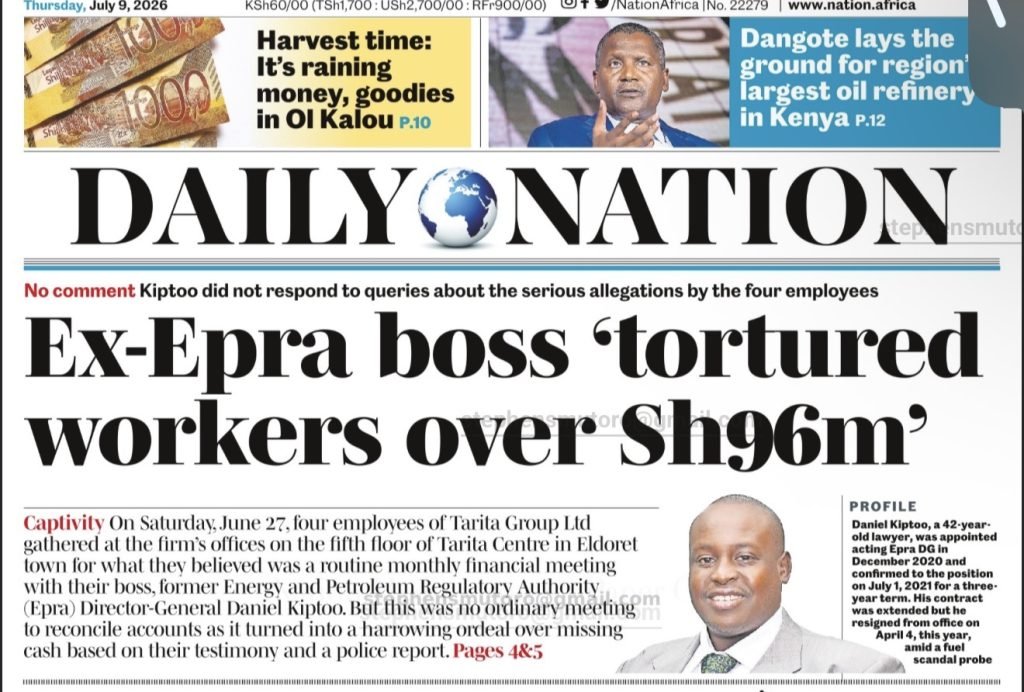
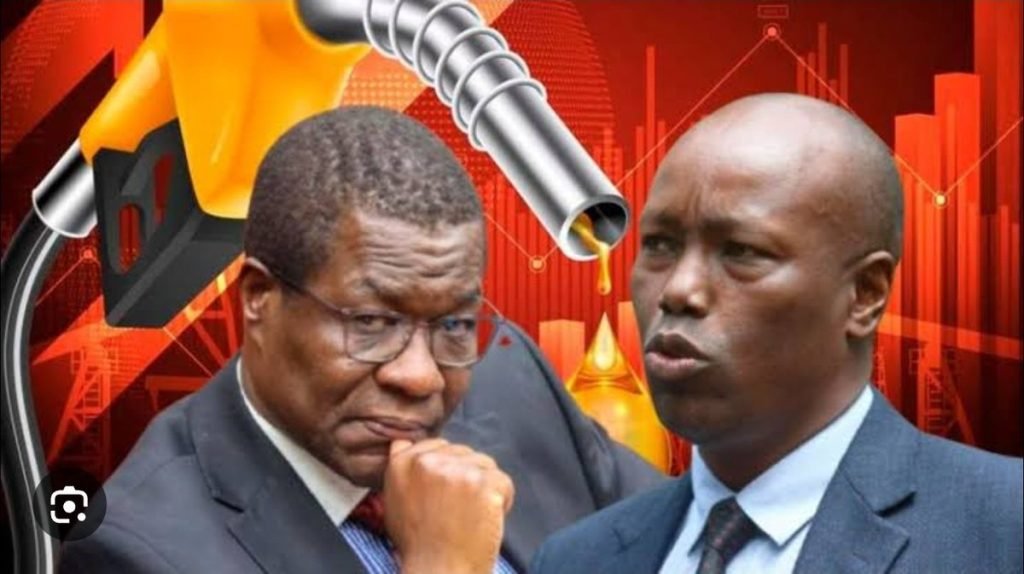
While the Auditor-General issued an unmodified opinion on EPRA’s financial statements — meaning the accounts were fairly presented — the report identifies significant underperformance against budget targets and a catalogue of legal violations that cast a shadow over the Authority’s management under the now-departed Director-General Daniel Kiptoo Bargoria (pictured)

Budget Underperformance
EPRA collected revenue of Kshs.2.83 billion against a budgeted Kshs.3.43 billion, an 18% shortfall. Expenditure absorption also fell short, with Kshs.2.44 billion spent against income of Kshs.2.83 billion — an under-absorption of 14%.
The Auditor-General warned the twin failures likely impacted negatively on service delivery to the public.
Ghost Vehicles: Kshs.20.7 Million Paid, Nothing Delivered
In one of the most glaring findings, Management awarded a Kshs.20,694,911 contract for two motor vehicles through the State Department for Public Works’ Supply Branch — bypassing mandatory procurement procedures under Section 52(4) of the Public Procurement and Asset Disposal Act, 2015.
Full advance payment was made before delivery, violating Section 146 of the same Act. Supplier letters dated May and June 2024 confirmed the vehicles were still in production in Japan, yet an acceptance committee certified them as received.
By December 2024, when the audit concluded, the vehicles had still not been delivered. The Auditor-General found Management in clear breach of the law.
Inflated Recruitment Contracts:
Over Kshs.120 Million — Management engaged a single consultancy firm for staff recruitment across two contracts — 61 and 121 vacant positions — worth Kshs.50,297,600 and Kshs.69,970,829 respectively, procured through single-source selection without legal justification.
The method violated Sections 124(12) and 124(13) of the procurement law.
A negotiation committee had determined the market rate for the 61-position contract at Kshs.22.5 million, yet Management awarded it at more than double that figure.
Both contracts exceeded their approved budgets by 68% and 75% respectively, breaching Sections 44(2) and 53(8) of the procurement law.
The second contract was also awarded to a consultant already engaged under the first, violating Section 130 of the Act. By 30 June 2024, Kshs.95,119,629 had been paid out.
Governance Audit Missing
Despite Management claiming a governance audit had been conducted as required under Paragraph 1.13 of the Mwongozo Code of Governance for State Corporations, no evidence or report of such an audit was provided to the Auditor-General.
Board Gender Composition Unlawful
Nine of EPRA’s eleven Board members were male — 82% — in direct violation of the constitutional two-thirds gender rule under Article 27(8) of the Constitution of Kenya, 2010.
Other Compliance Failures
The report flags incomplete authentication of academic certificates for 52 employees; 185 staff paid net salaries below one-third of basic pay, contravening Section 19(3) of the Employment Act, 2007; 47 employees carrying forward excess leave days totalling Kshs.12,194,586 in accrued allowances; and EPRA’s continued failure to onboard services onto the e-Citizen platform in defiance of a Presidential directive issued in August 2023.
Outstanding Debts and Payables
EPRA holds Kshs.566,886,064 in receivables, including Kshs.320,899,132 owed by Kenya Power and Lighting Company and Kenya Revenue Authority outstanding for over a year, with no evidence of recovery action.
On the other side, Kshs.367,871,990 in payables includes Kshs.50,834,864 outstanding beyond one year, with potential chargeable interest implications that Management failed to disclose as contingent liabilities.
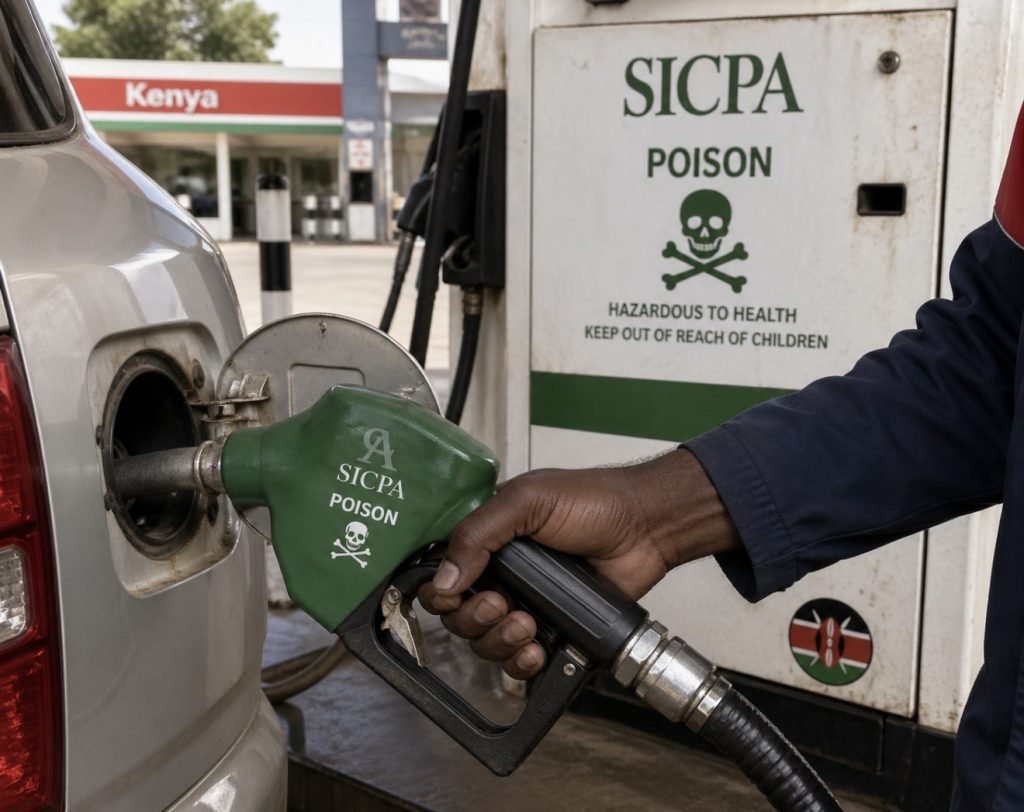
The report’s findings sit at the heart of COFEK’s ongoing legal campaign against EPRA and associated actors in the petroleum sector including reports that SICPA SA has been issued with another longterm and unlawful procurement on fuel marking worthy billions