The Central Bank of Kenya occupies a position of singular constitutional importance. Established under Article 231 of the Constitution of Kenya, 2010, and governed by the Central Bank of Kenya Act (Cap. 491), it holds a mandate that touches every Kenyan household: formulating monetary policy, maintaining price stability, issuing currency, and holding and managing the nation’s foreign exchange reserves.
Yet across each of these domains — prudential regulation, monetary policy, public debt management, foreign currency reserves, and gold holdings — a consistent and troubling pattern has emerged: the CBK increasingly conducts consequential national business in the shadows, deploying its constitutional independence not as a shield for sound governance but as a cloak against accountability.
This article examines that pattern through the lens of Kenya’s constitutional framework and the growing body of jurisprudence that directly constrains it.
The Constitutional Architecture of Accountability
The CBK’s independence, though real, has never been absolute. Article 231 grants the Bank autonomy in formulating monetary policy, but Articles 10(2), 35, and 201 impose countervailing transparency obligations that run through the entire Constitution.
Article 10(2) binds all State organs and persons exercising public functions to national values including transparency, accountability, public participation, and good governance. Article 35 guarantees every citizen the right of access to information held by the State or any person where such information is necessary for the exercise or protection of a right or fundamental freedom. Article 201 mandates that all public finance must be managed with openness, accountability, and full disclosure of all revenue and expenditure.
The Public Finance Management Act, 2012 reinforces these principles by requiring that all public borrowing be authorised, disclosed in budget documentation, and reported to Parliament and the Controller of Budget.
These are not soft aspirational norms. The High Court made this unambiguously clear in Okiya v Central Bank of Kenya & 4 Others (Petition 597 of 2017), when it rejected CBK’s claim that its operational autonomy insulated it from constitutional scrutiny over a currency printing tender.
The Court held that the CBK had violated Article 227(1) by compromising the fairness, transparency, and accountability of the procurement process, and pronounced the foundational principle that institutional independence is “not a carte blanche to conduct themselves on whim” but is “configured to the execution of their mandate.” That mandate, in every dimension, is bounded by constitutional obligations to the public.
Prudential Regulation: Reform Delayed, Opacity Entrenched
The CBK’s Prudential Guidelines govern every licensed bank and financial institution in Kenya. They are amended through circulars issued unilaterally by the CBK, without the legislative scrutiny or systematic public participation applied to primary legislation. That the Banking (Penalties) Regulations governing violations of those guidelines remained unreformed from 1999 to 2024 — a quarter century during which Kenya’s financial sector transformed beyond recognition — is itself a damning admission of institutional inertia.
The Draft Banking (Penalties) Regulations, 2024, acknowledged that the framework needed a “clearer assessment of violations and deterrence of unlawful practices,” a concession that the existing regime had provided neither clarity nor deterrence.
More structurally problematic is the conflict of interest embedded in CBK’s dual role as monetary authority and fiscal agent of the Government. When CBK simultaneously sets the interest rate environment through the Monetary Policy Committee and manages domestic debt auctions on behalf of the Treasury, it occupies both sides of the market it purports to regulate objectively. Political economy analysts have called for the fiscal agent role to be separated from CBK precisely because “the wide domestic arbitrage reflects the conflict between CBK’s roles,” a conflict that systematically distorts both monetary policy signals and the pricing of government securities — to the detriment of ordinary borrowers and savers. The Business Laws (Amendment) Act, 2024, which dramatically increased minimum bank capital requirements and extended CBK’s mandate to cover non-deposit taking credit providers, was enacted through an omnibus amendment process rather than dedicated consultative rule-making, raising serious public participation concerns under Article 10(2) that have yet to be litigated.
Monetary Policy: The IMF Shadow
The Monetary Policy Committee’s bimonthly press releases maintain the form of independent central banking while obscuring its substance. What the press releases do not disclose is that Kenya’s monetary policy stance has, since at least 2021, operated within conditionalities negotiated with the International Monetary Fund under Kenya’s Extended Credit Facility and Extended Fund Facility programme. When the CBK Governor expressly told his August 2024 press conference that “monetary policy is in accord with IMF requirements,” he acknowledged what the press releases systematically conceal: that the ostensibly independent MPC is making decisions within parameters set by a foreign multilateral institution, without parliamentary pre-approval and without public disclosure of those constraints in the instruments that purport to explain the decisions.

The consequences are material. The CBK raised its Central Bank Rate from 9.5% to 13% between 2023 and February 2024, primarily to arrest the shilling’s depreciation ahead of the USD 2 billion Eurobond maturity. This was a fiscal-driven monetary tightening that imposed billions of shillings in additional borrowing costs on Kenyan households and businesses — dressed in the language of inflation management. When, in December 2024, economic fundamentals strongly supported a bold rate reduction, the MPC cut by only 75 basis points against the prevailing analytical consensus that 200 basis points was warranted. Critics, including the Institute of Economic Affairs Kenya, documented that the decision bore the unmistakable fingerprints of IMF conditionality rather than domestic macroeconomic logic. No voting records, no dissents, and no minority positions are ever published. The MPC deliberates in a black box and announces conclusions. That is not the transparency Article 10(2) contemplates.
The new KESONIA credit pricing reform — linking bank lending rates to a transaction-based interbank benchmark — is itself a belated admission that the previous monetary policy transmission architecture was broken. Banks had systematically failed to pass rate reductions to borrowers even as the CBR fell, a failure the CBK acknowledged publicly only after sustained friction with commercial banks.
That this dysfunction persisted for years without regulatory enforcement action illustrates what happens when a regulator’s accountability to the public it serves is structurally weak.
National Debt: Arithmetic in the Dark
Kenya’s public debt reached KSh 11,814.5 trillion — approximately 67.8% of GDP — by June 2025, growing by 11.7% in a single financial year. Domestic debt expanded by 17% to KSh 6,326 billion, while debt service payments for 2024/25 reached KSh 1.72 trillion, consuming between 30 and 35 cents of every shilling of tax revenue in interest alone. These are verifiable published figures. What is not verifiable — and what constitutes the most serious accountability failure in Kenya’s public financial architecture — is the KSh 6.16 trillion discrepancy between CBK’s records of outstanding debt and those of the National Treasury, highlighted in constitutional litigation that names the CBK as a respondent. The allegation — that the CBK is incurring debt undocumented by the National Treasury — has not been publicly refuted by the CBK with the granular accounting transparency the Constitution demands.
The identities of Kenya’s commercial creditors remain unknown to the public. CBK publishes domestic debt tables weekly, showing auction results, maturities and rollover risks — but never the creditor’s name. The identity of Eurobond bondholders is similarly undisclosed.
Article 201 of the Constitution requires full disclosure of all public revenue and expenditure, and Article 35 guarantees the right of access to information. A debt register that omits the identity of creditors holding tens of billions of dollars of Kenyan public obligations satisfies neither provision. The Auditor-General has repeatedly warned that Kenya’s reliance on successive Eurobonds — each issued at a higher coupon rate than its predecessor, reflecting the market’s assessment of mounting risk — raises fundamental sustainability concerns that Parliament has been unable to interrogate effectively because the terms are negotiated and executed by the CBK as fiscal agent without pre-disclosure.
Foreign Exchange Reserves: Figures Without Full Context
Kenya’s foreign exchange reserves have recovered impressively from crisis-level lows of below four months import cover in November 2022 and February 2023, to USD 13.65 billion providing 5.8 months cover as at April 2026. The recovery is real. The opacity lies not in the headline numbers — which CBK does publish, though with a 1-3 month lag — but in what those numbers conceal. A substantial portion of the reserve build-up reflects borrowed dollars: IMF disbursements under the ECF/EFF programme and proceeds from new Eurobond issuances. The distinction between earned reserves — funded by export earnings, remittances, and foreign direct investment — and borrowed reserves that will need to be repaid with interest is never drawn in CBK’s public communications.
The IMF’s own projections for Kenya’s reserves have consistently tracked significantly lower than CBK’s reported figures — projecting 3.5, 3.7, and 3.8 months cover for 2024, 2025, and 2026 respectively, against CBK’s reported 5+ months. No public reconciliation of this persistent gap has been offered. The methodology for determining which reserves are “usable” — as opposed to pledged, encumbered, or committed to near-term debt service — is not published.

CBK also acknowledges intervening in foreign exchange markets “periodically to smooth volatility,” but the scale, frequency, and cost of those interventions are not systematically disclosed. For a country whose shilling depreciated by over 30% in 2022-2023 and whose debt is 46.5% denominated in foreign currencies, this opacity is not a technicality: it is a fundamental denial of citizens’ rights under Articles 35 and 201 to understand the true state of their national finances.
Gold Reserves: The Bank of England Question
Kenya’s gold holdings — a mere 0.02 tonnes, valued at KES 238 million as at June 2025 — are a rounding error in the global reserves picture. But the controversy surrounding their management has crystallised, with unusual precision, every accountability concern this article addresses.
Governor Kamau Thugge disclosed to Bloomberg News in October 2025 that CBK had opened talks with the Bank of England on the logistics of acquiring and storing gold, declining to specify quantities, cost, legal protections, or the identity of those who negotiated the arrangement. No disclosure was made to Parliament. No public consultation was conducted. The terms, if any agreement was reached, remain unknown.

A Nairobi law firm wrote formally to the Governor warning that the decision to vest national wealth in a foreign jurisdiction under another state’s legal system without public disclosure constituted a violation of the constitutional principles of public participation and accountability — and that Kenya risked the Venezuelan precedent, where gold stored at the Bank of England was frozen during a geopolitical standoff, leaving the sovereign without recourse.
These are not academic concerns. They are the lived experience of a country that watched its Eurobond yields spike to distress levels while a foreign-law dispute over reserve access could have compounded the crisis. The Constitution’s answer to this risk is transparency and public participation before commitments are made, not after.
The Jurisprudence: Independence Without Impunity
The decided cases draw a clear and consistent line. In Boniface Oduor v Attorney General (Petition 413 of 2016), the High Court upheld CBK’s exclusive monetary policy mandate under Article 231, striking down the parliamentary interest rate cap as an unconstitutional intrusion. But the same case confirmed that CBK’s independence is purposive — “an antidote against regrettable memories of an all-powerful Presidency” — not a general immunity from constitutional scrutiny.
In Petition E181 of 2021, the Court granted conservatory orders against CBK’s SWIFT connectivity directive, holding that even technical regulatory instructions must comply with Article 47’s fair administrative action requirements and must be accompanied by reasons. In the County Assembly of West Pokot matter, the Court held that CBK’s SOPs on banking transactions bind all public bodies without exception, while simultaneously affirming that accountability and transparency must be maintained “in all transactions regardless of whatever public entity seeks exemption.”
The through-line is unambiguous: the Constitution tolerates CBK’s independence; it does not tolerate CBK’s opacity.
Personal Accountability: Governor Thugge, Deputy Governor Koech, and Deputy Governor Nyaoma — The Fuel Price Crisis and the Failure of Leadership
The accountability deficit described in this article is not an impersonal institutional failing. It has names and faces.
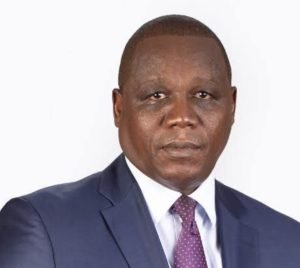
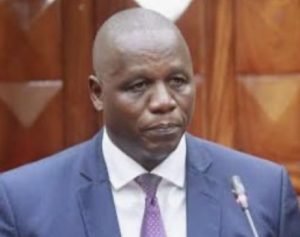
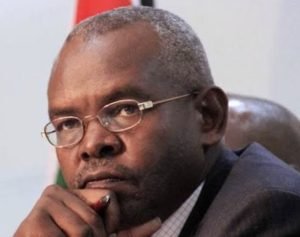
Dr Kamau Thugge has served as CBK Governor since June 19, 2023. Dr Susan Koech has served as First Deputy Governor since March 10, 2023. Mr Gerald Nyaoma, a 36-year CBK veteran who previously directed the Bank Supervision, Financial Markets, and Internal Audit Departments, assumed office as Second Deputy Governor on January 7, 2025. Together, this triumvirate constitutes the complete executive leadership of Kenya’s central bank during the most consequential financial stress period since the post-2007 election crisis.
They are individually and collectively responsible — under the CBK Act, the Constitution, and the principles of administrative accountability — for every policy choice and every failure of omission that has contributed to the fuel price catastrophe that Kenyans are currently enduring.
The dimensions of that catastrophe are stark and escalating. In April 2026, EPRA announced the largest single-cycle fuel price increase in at least 21 years: petrol rose KSh 28.69 per litre to KSh 206.97, while diesel — the lifeblood of Kenya’s transport, manufacturing, construction, and agriculture sectors — jumped KSh 40.30, a 24.2 percent single-month increase, to an all-time record high of KSh 206.84. The May–June 2026 cycle brought further punishment: petrol rose a further KSh 16.65 to KSh 214.25, while diesel climbed an additional KSh 46.29 to a historically unprecedented KSh 242.92 per litre in Nairobi. The landed cost of imported diesel surged 68.7 percent in a single pricing window; kerosene more than doubled.
These are not abstract statistics. They are the cost of cooking food, moving goods, running hospitals, and keeping businesses alive for thirty-eight million Kenyans, the majority of whom earn less than KSh 50,000 per month.
The standard defence offered by the CBK leadership is geopolitical force majeure: the Middle East conflict, the Strait of Hormuz disruption, and spiking global crude prices.
Governor Thugge has attributed rising inflation to “the conflict in the Middle East” disrupting global supply chains and “significantly higher energy prices.” This is true as far as it goes. But it goes nowhere near far enough, because Kenya’s exposure to global petroleum shocks is not an act of God — it is the product of identifiable policy choices made and omitted by the very leadership now pleading helplessness.
The structural argument against the CBK triumvirate rests on three interconnected failures for which they bear direct institutional responsibility.
First: the failure to build and deploy a currency hedging architecture. Kenya imports 100% of its refined petroleum products, priced exclusively in United States dollars. Every weakening of the Kenya shilling against the dollar translates, with algebraic precision, into higher pump prices through EPRA’s landed-cost formula. The shilling averaged KSh 130.08 against the dollar in March 2026 — a figure that, while far improved from the historic low of KSh 160.75 reached in early 2024, still amplified the impact of already expensive dollar-denominated cargoes. CBK possesses the legal tools — forward contracts, currency swaps, and reserve deployment — to hedge against precisely this kind of import-cost amplification. Section 4 of the CBK Act charges the Bank with maintaining “a sound financial system” and “supporting the economic policy of the Government.” Foreign exchange stability is not an incidental CBK function; it is a core mandate.
The CBK’s own financial markets framework acknowledges that “forwards” can be used to “hedge against exchange rate risk.” Yet no systematic, publicly disclosed petroleum import hedging programme has been deployed. Governor Thugge’s administration has managed the shilling’s exchange rate without building the institutional buffer — a strategic petroleum import hedging facility — that would have insulated consumers from the full transmission of global price shocks into domestic pump prices.
Second: the failure to use monetary policy boldly enough, and in time, to protect purchasing power. When the CBK raised the CBR from 9.5% to 13% between 2023 and February 2024, it did so to defend the shilling against Eurobond-driven depreciation pressure. That decision was, as argued above, primarily a fiscal operation dressed as monetary policy. Its cost — borne by households and businesses in elevated borrowing costs — was never acknowledged by the triumvirate as a consumer protection issue.
More critically, when conditions turned in 2024 and the case for aggressive rate cuts became overwhelming — inflation at record lows, reserves rising, the shilling stabilised — Governor Thugge and his deputies delivered cautious incremental reductions, deferring to IMF conditionality rather than boldly stimulating the domestic credit environment and putting downward pressure on both the cost of living and the cost of fuel. A more aggressive monetary easing cycle, executed with genuine independence from IMF conditionality, would have strengthened domestic demand, reduced the premium on dollar credit, and created conditions for a stronger shilling — all of which directly reduce the landed cost of petroleum imports.
The IMF has since revised Kenya’s 2026 growth forecast downward to 4.4–4.5% and warned that the fuel crisis is driving inflation toward 5% or higher. The 75 basis point cut of December 2024, against a consensus recommendation of 200 basis points, was not prudence. In hindsight, it was the wrong call at the wrong moment, made by the wrong people for the wrong reasons.
Third: the failure of transparency that made crisis-proofing impossible. Deputy Governor Nyaoma brings to his role 36 years of CBK experience, including leadership of the Financial Markets, Banking Services, Bank Supervision, and Internal Audit Departments. His institutional expertise spans exactly the domains — foreign exchange management, market supervision, reserve management — where the failures described in this article are most acute. Deputy Governor Koech brings her own seniority, having been honoured as a National Hero at Mashujaa Day 2025 “in recognition of her exemplary and transformative leadership in the Banking and Public Sector.”
The question this article asks is not whether these individuals are experienced or honoured. It is whether they have exercised their combined mandate with the transparency, accountability, and boldness that the Constitution and the economic moment demanded. On the evidence, the answer is no.
The opacity in reserve management that masks whether Kenya’s forex buffer is earned or borrowed, the absence of a published petroleum hedging strategy, the failure to disclose IMF conditionality in MPC press releases, the Bank of England gold talks conducted without parliamentary disclosure — none of these omissions are attributable to structural forces beyond the control of the executive trio.
They are choices. They bear consequences. And under Articles 10(2), 35, 201, and 231 of the Constitution, those consequences carry names.
Governor Thugge, as MPC Chairman and the Bank’s chief executive officer, chairs every monetary policy decision and controls the external communications strategy that has systematically obscured the IMF’s role in those decisions. Deputy Governor Koech, whose portfolio encompasses the financial system’s stability architecture, presides over the same Bank Supervision framework that failed to enforce monetary policy transmission on commercial banks for years and that produced the KESONIA reform as a belated correction. Deputy Governor Nyaoma, as the Bank’s most experienced internal hand and the former Director of Financial Markets, carries particular responsibility for the absence of a strategic foreign exchange hedging mechanism designed to cushion petroleum import costs — an absence that is now costing every Kenyan household thousands of shillings per month at the pump.
The CBK Act does not permit these three individuals to shelter behind geopolitical externalities. Section 4 requires the Bank to maintain sound conditions in the monetary, credit, and financial system of Kenya in the public interest.
The fuel price crisis, compounded by inadequate hedging, delayed monetary easing, and an opaque reserve management framework, is precisely the kind of systemic harm to the public interest that their collective leadership was constitutionally and statutorily engaged to prevent.

Conclusion
The Central Bank of Kenya is constitutionally mandated to serve Kenya. That mandate does not end at price stability and reserve management: it encompasses, as the jurisprudence confirms and the Constitution demands, transparency in how those functions are performed, accountability to Parliament and the public for decisions taken, and meaningful public participation in policy choices of national consequence. What the evidence across prudential regulation, monetary policy, debt management, foreign exchange reserves, gold holdings, and the fuel price crisis reveals is a systematic drift from those obligations — a drift in which IMF conditionality substitutes for democratic deliberation, fiscal agent functions generate conflicts of interest that distort monetary policy, debt registers omit creditor identities, and talks about storing sovereign gold in a foreign jurisdiction are conducted without public disclosure of terms, costs, or legal protections.
At the apex of this institutional failure sit three named individuals — Governor Kamau Thugge, Deputy Governor Susan Koech, and Deputy Governor Gerald Nyaoma — each appointed by the people’s President and vetted by the people’s Parliament, each in possession of the expertise, the authority, and the constitutional mandate to have governed differently.
That they have not done so — that diesel now costs KSh 242.92 per litre, that reserve management remains opaque, that monetary policy decisions are made behind IMF-conditionality walls without parliamentary disclosure, and that the Bank’s prudential architecture accumulated 25 years of unreformed penalty regulations — is not an institutional abstraction.
It is a personal and collective failure of public trust, for which the Constitution provides both the standard and, through the courts and Parliament, the remedy.