
Carrefour's Kenyan Windfall: What Nakumatt's Collapse Built, Consumers Must Now Watch
COFEK reads the numbers differently. Carrefour's expansion has not happened in a competitive vacuum — it has happened in the wreckage of Nakumatt Holdings, Uchumi Supermarkets, Tuskys and Mulleys Supermarkets, four homegrown chains that collapsed under debt, mismanagement and, in some cases, outright plunder of supplier and shareholder funds.
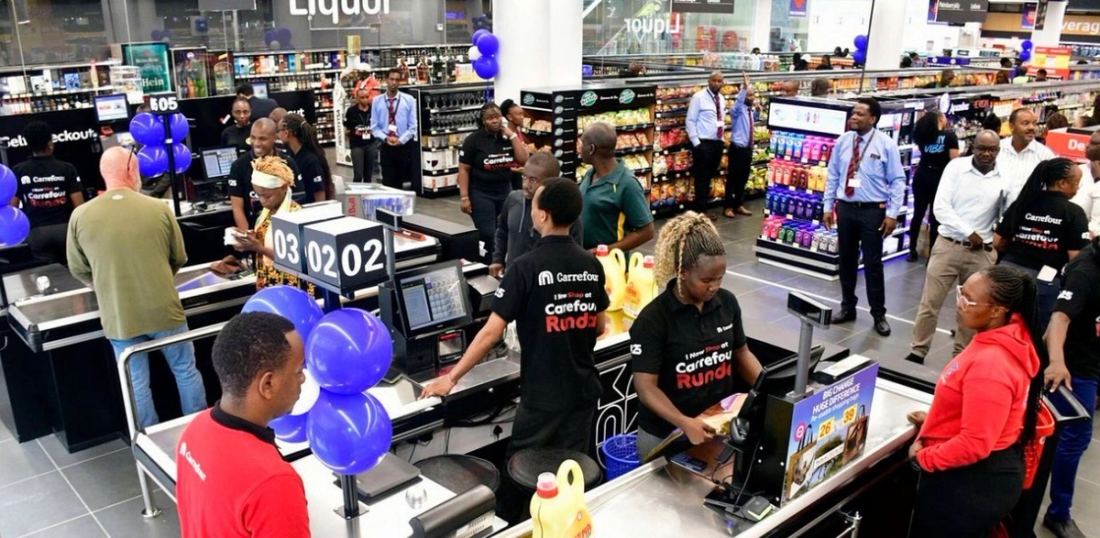
Carrefour Kenya closed 2025 with eight new outlets and revenues of AED 1.386 billion (Sh48.84 billion), a 13.7 percent jump from AED 1.219 billion (Sh42.95 billion) the previous year.
The retailer now runs 34 branches nationwide, and its Dubai-based parent, Majid Al Futtaim, credits the growth to "disciplined execution" across a diversified portfolio.
COFEK reads the numbers differently. Carrefour's expansion has not happened in a competitive vacuum — it has happened in the wreckage of Nakumatt Holdings, Uchumi Supermarkets, Tuskys and Mulleys Supermarkets, four homegrown chains that collapsed under debt, mismanagement and, in some cases, outright plunder of supplier and shareholder funds.
Carrefour did not out-compete these retailers in the ordinary sense. It inherited their customers by default, stepping into shelf space and market share that Kenyan capital vacated. The numbers in context
Kenya generated AED 1.386 billion of Majid Al Futtaim's AED 35,859 million in group-wide 2025 revenue — about 3.87 percent of the total, making it the group's fifth-largest market after the UAE, Saudi Arabia, Qatar and Egypt.
Regionally, Carrefour's other African outlets in Egypt and Uganda made AED 2.39 billion and AED 150 million respectively last year, underscoring how quickly Kenya has become the group's most important African market outside Egypt. That scale matters. A retailer generating close to Sh49 billion a year in one market carries real weight over suppliers, landlords and, ultimately, consumer prices.
COFEK's concern is not that a multinational is succeeding in Kenya — foreign direct investment is welcome — but that this scale is consolidating with minimal domestic scrutiny of how Carrefour treats Kenyan suppliers, particularly small and medium producers who have historically complained of delayed payments, punitive listing fees and shelf-space extortion under the very same retail model that helped sink Nakumatt and Uchumi in the first place.
Consolidation without competition policy As Carrefour "intensifies competition on Naivas and Quickmart," the two leading Kenyan-owned chains left standing, the retail sector risks drifting toward a three-player oligopoly.
COFEK has previously warned that unchecked supermarket concentration squeezes suppliers on one end and consumers on the other, through pricing power, private-label displacement of local brands, and reduced choice at checkout even as store counts rise. The Competition Authority of Kenya has a mandate to monitor market dominance and abuse of buyer power in retail. With Carrefour's footprint growing by a quarter in a single year — from 26 to 34 stores — and its Kenyan revenue climbing nearly 14 percent, that mandate needs active exercise now, not after another wave of consolidation makes intervention moot.
It appears that Careffour has developed a budget — and indeed finds it cheaper to easily pay the CAK fines — than comply with the anti-trust laws and especially how they shortchange suppliers on discounts and other issues
COFEK's position
COFEK is not opposed to Carrefour's growth. We are opposed to growth that repeats the extractive supplier relationships that hollowed out Kenyan retail chains before it, and to a competition landscape where three large players quietly divide a market that Kenyan entrepreneurship built and then lost.
COFEK calls on:
• The Competition Authority of Kenya to conduct a market study on supermarket concentration and buyer-power abuse, with Carrefour, Naivas and Quickmart's supplier terms specifically in scope. • Majid Al Futtaim to publish, or make available to Kenyan regulators, its local supplier payment terms and average payment periods, given the sector's history of supplier defaults triggering retailer collapse. • Kenyan policymakers to revisit protections for local suppliers and SMEs feeding into large-format retail, so that the next chapter of Kenya's supermarket sector is not simply "which foreign chain absorbs the most of the last one's customers."
In our view, CAK leadership must come very strong on Carrefour and its near impunity in failing to be competitive. Consumers benefited from Carrefour filling shelves that Nakumatt, Uchumi, Tuskys and Mulleys left empty.
Whether that benefit is durable — in prices, in choice, and in a healthy local supplier base — is the question COFEK will keep asking as the numbers keep growing.
Filed underCarrefour, Kenya, Competition, Authority, Anti-trust