SICPA's Turkish Setback Raises Hard Questions for African Governments That Buy Its Systems
A Turkish ruling reopens a €100 million dispute. A Swiss corruption sanction is already final. Governments and consumers that rely on SICPA's tax-stamp and traceability systems should take note.
Turkey's Court of Cassation has reopened a legal fight that SICPA, the Swiss security-ink and tax-stamp giant, thought it had largely won.
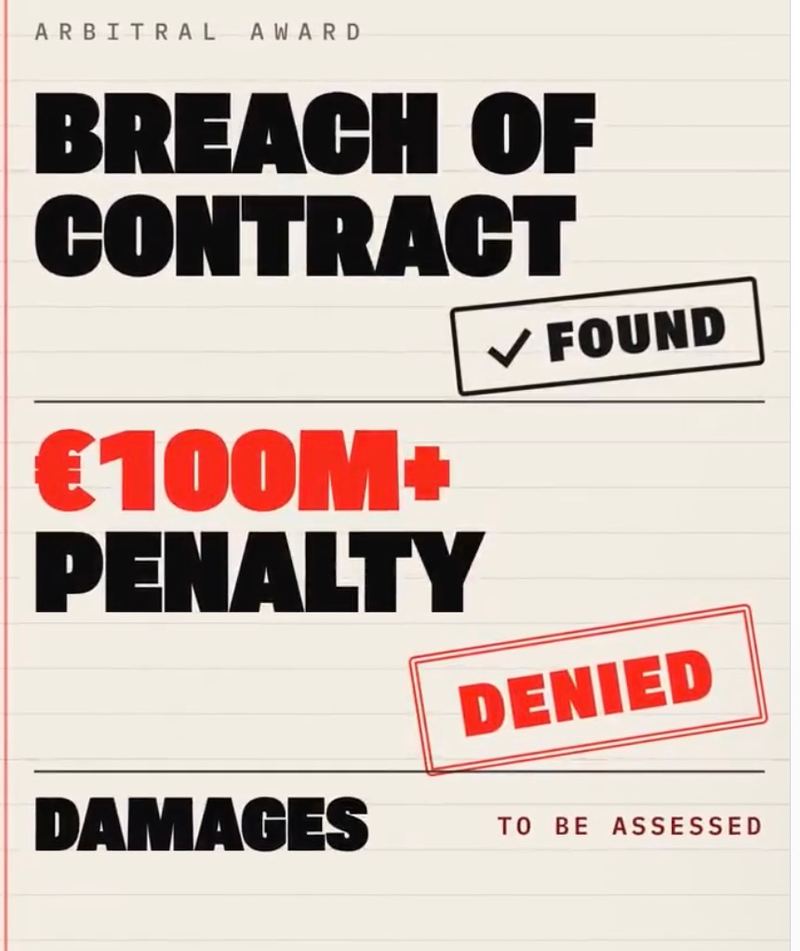
According to reporting by “The Ledgers”, drawing on Ekonomim, an arbitral tribunal found that SICPA breached its contractual obligations to Derinay Enerji.
Yet the tribunal rejected Derinay's contractual penalty claim, which exceeds €100 million. It ruled that the loss must be proven separately and assessed as damages.
Derinay challenged the award, but the Istanbul Regional Court of Appeal refused to set it aside. The Court of Cassation has now overturned that refusal and sent the case back for reconsideration.
The impartiality question
Derinay's objection centres on the arbitrator SICPA appointed, Prof. Dr. Erdem Büyüksağış. It alleges he did not disclose past academic and professional relationships with the company's lawyers.
Ekonomim reports that the Court of Cassation held that the information being available online did not remove the arbitrator's duty to disclose
Arbitration depends on parties trusting that decision-makers are independent.
A duty of disclosure that a tribunal member can discharge by pointing to a public website would be of little use.
The ruling does not decide the €100 million claim. It means the award's validity is under renewed review, and the penalty claim's future depends on proceedings that are still running. Neither side has won.
A record that adds weight
The Turkish case lands on top of a damaging history. On 27 April 2023, Switzerland's Office of the Attorney General imposed a total payment obligation of CHF81 million on SICPA SA (CH) for corporate criminal liability connected with corruption: a CHF1 million fine and a CHF80 million compensatory payment.
According to the prosecutor's annual report, organisational deficiencies allowed employees to bribe foreign public officials in Brazil, Colombia and Venezuela. The decision became final.
SICPA said at the time that it disagreed with the grounds for the sanction. It said the acts happened without its knowledge or approval, that it had sanctioned those responsible, and that it had fixed its compliance system.
Those are the company's claims, and they deserve to be reported alongside the finding. The sanction itself, however, is a settled legal fact.
Why Africa should pay attention
The reported bribery was in Latin America, and nothing in this record alleges wrongdoing in Africa. But a finding that a firm's controls failed to stop its employees from paying foreign officials is relevant to any government that has bought, or is considering buying, its systems.
Tax-stamp, excise-marking and traceability contracts are long-running, technically opaque and often awarded with little public scrutiny. They give a vendor deep access to revenue data. They also depend heavily on consultants and intermediaries, which is where corruption risk usually sits.
The Ledgers' 6 October investigation examined a consultancy relationship tied to a 2014 tax-stamp tender in Türkiye, along with revenue reports, invoices and payment disputes described in January 2018 correspondence. It separated what the documents show about the commercial structure from the parties' unverified allegations.
That distinction matters here too. The Ledgers says it will put detailed questions to both Derinay and SICPA on the contract's scope, arbitrator selection, the impartiality objections and the penalty calculation.
What consumers and regulators should ask
For African regulators, parliaments and consumer bodies, the practical lessons are plain:
- Disclosure: Ask vendors for full details of intermediaries, consultants and commissions in any tax-stamp or traceability tender.
- Integrity clauses: Contracts should allow termination and data-access rights if a vendor is later sanctioned.
- Dispute forums: Arbitration clauses should require strict arbitrator disclosure, the very issue Turkey's top court has now put in focus.
- Public reporting: Citizens who ultimately pay for these systems, through prices and taxes, are entitled to know who profits.
Caught flat-footed?
SICPA did not lose in Turkey. It lost a procedural ruling and faces a rehearing, with the €100 million claim unresolved. It is fair to say its position is more exposed than it was, and that a final Swiss sanction makes every new allegation harder to wave away.
The question for governments is not whether SICPA is guilty of more than has been found. It is whether they have asked the right questions before signing, and whether they would know the answers if they did.
Sources: The Ledgers, drawing on Ekonomim, the Swiss Office of the Attorney General's 2023 annual report, and SICPA's statement on the Swiss decision. The Turkish court's reasoning is as reported by Ekonomim and has not been independently verified.
Filed underCorrupt, SICPA, Court, Turkey, Africa