Why Kenya’s Ouster and Public Humiliation of 100 years old India firm Tata Chemicals Lake Magadi Is the Wrong Move
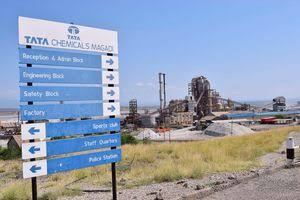
President William Ruto’s declaration that Tata Chemicals should “pack and go” from Lake Magadi, following Cabinet Secretary Hassan Joho’s July 29 shutdown order, may play well as economic nationalism.
But scrutinised against Kenya’s own interests, the move is difficult to defend. Process before punishment: Government’s grievances — unpaid royalties, weak local procurement, poor Community Development Agreement implementation, a missing beneficiation strategy — may well be legitimate.
But grievances built over “years of engagement,” as Joho himself put it, do not justify an abrupt shutdown followed by a presidential order to leave outright. Kenya has statutory mechanisms — licence review, negotiated compliance timelines, graduated penalties — precisely so that a century-old investment isn’t dismantled by ministerial decree.
Tata’s own move to the High Court, and Justice Musyoka’s refusal to lift the suspension, shows the matter is still legally unsettled.
A president publicly ordering a litigant to “get out” while the case is sub judice pre-empts the court and signals that due process is optional when politically convenient.
Investor confidence is not abstract: Kenya routinely courts foreign direct investment, particularly in mining and manufacturing, as central to Vision 2030 and its industrialisation ambitions.
Summarily expelling Africa’s largest soda-ash producer — a business that has operated continuously since 1911 — tells every prospective investor, Indian or otherwise, that entry costs are sunk but exit can be ordered overnight.
Diplomatically, this also strains a bilateral relationship with India that Kenya has cultivated across trade, education, and especially on health sectors.
The economic cost is concrete, not hypothetical. More than 95% of Magadi’s output moves by rail to Mombasa for export; Kenya supplies roughly 1% of global soda-ash output.
Halting that pipeline doesn’t only hurt Tata — it disrupts glass, detergent, and battery-chemical supply chains that rely on Kenyan soda ash, and it removes a major employer and infrastructure provider in an arid Kajiado landscape with few alternative livelihoods.
Reports from Magadi already describe women trekking kilometres for water after community water projects stalled amid the shutdown. Workers face mass layoffs.
These are immediate, human costs imposed before any replacement investor exists.
“Bring in someone new” is not a plan. Ruto has floated attracting a fresh investor obligated to build glass and chemical processing plants locally — a reasonable value-addition goal.
But no such investor has been named, and mining ventures of this scale typically take years to permit, finance, and construct.
In the interim, Kenya loses royalty revenue, export earnings, and jobs, betting an operating asset on a hypothetical replacement.
A better path existed: Government held real leverage — compliance orders, royalty enforcement, court backing, even the suspension itself — without needing a presidential ultimatum to a company still contesting the underlying facts in court.
Renegotiating terms, imposing binding beneficiation deadlines, and enforcing local employment quotas achieve the stated goals without vacating a century of infrastructure, jobs, and export revenue built around Magadi.
Kenya is right to demand more local benefit from its mineral wealth.
It is on far weaker ground insisting on Tata’s outright expulsion — mid-litigation and without a credible successor investor — when firmer regulation could plausibly have delivered the same outcome at a fraction of the economic and diplomatic cost.
Filed underTata, Chemicals, Magadi, KAJIADO, Kenya, Ruto, COFEK