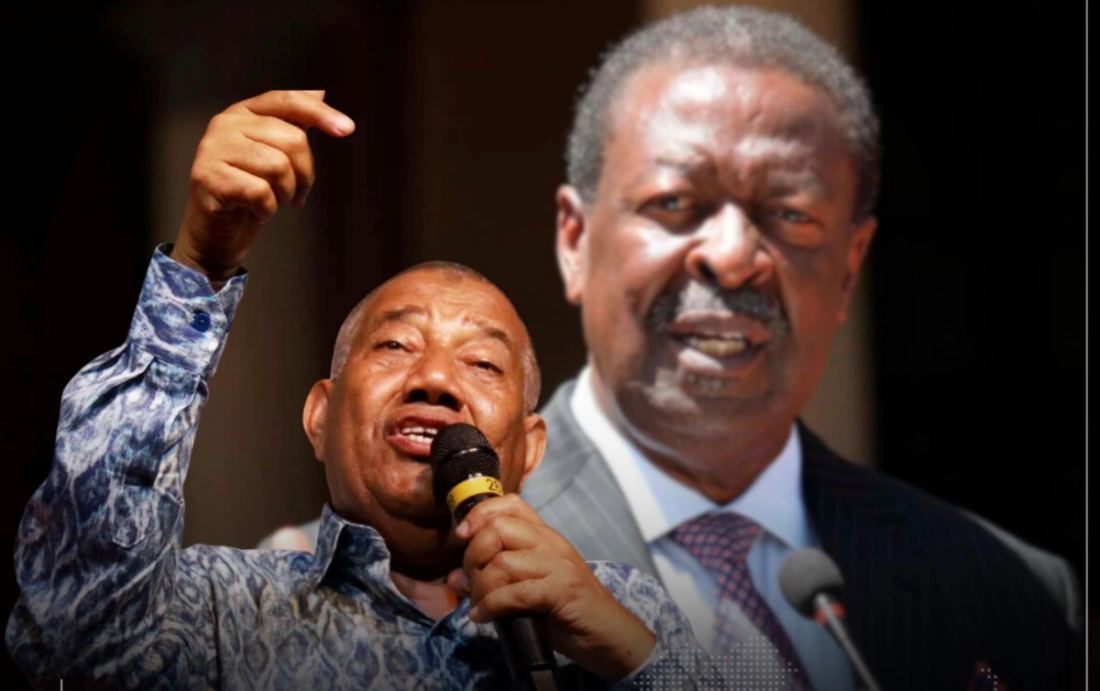
Judicial Service Commission Says Appellate Judges Kimaru, Munyao and Okello Have Case to Answer
✅On 12 May 2026, the three judges issued a dispositive order — staying the High Court's conservatory orders in the US-Kenya Health Framework case — without giving a single reason. The reasoned ruling was reserved for 30 October 2026. Five months later.
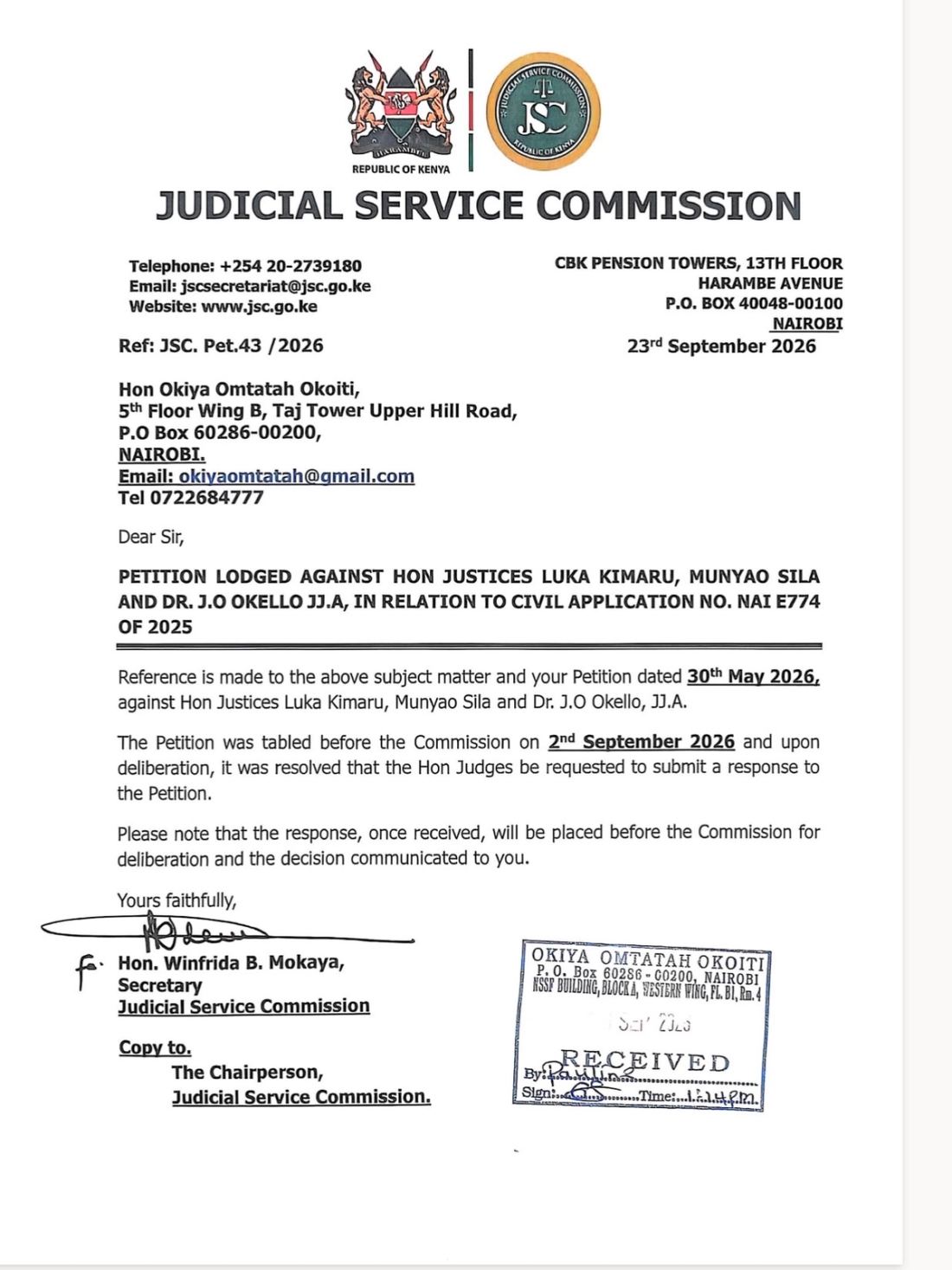
The JSC says the Judges have a case to answer: That is the whole ballgame.
Omtatah's petition against Justices Kimaru, Munyao and Okello has cleared the first gate — the JSC has looked at it and decided the allegations are not frivolous. The judges must now respond. Here is what they are being asked to explain.
✅On 12 May 2026, the three judges issued a dispositive order — staying the High Court's conservatory orders in the US-Kenya Health Framework case — without giving a single reason. The reasoned ruling was reserved for 30 October 2026. Five months later.
✅The effect was immediate and irreversible. The Framework could be fully implemented — sensitive health data transferred, multi-year fiscal commitments locked in, over 28,000 health workers absorbed, regulatory authority ceded — long before the High Court ever determined whether any of it was constitutional. And because there was no reasoned ruling, Omtatah could not competently appeal to the Supreme Court.
✅The apex court has held repeatedly — in Jimi Wanjigi and County Assembly of Migori — that an appeal cannot be jurisprudentially determined in the absence of reasons. No reasons, no appeal. The Petitioner was locked out of the Supreme Court, and the High Court petition was rendered academic before it was ever heard.
🌻Omtatah's case is not that the judges reached the wrong conclusion. It is that they adopted a procedure unknown to law — a dispositive order without contemporaneous reasons — knowing it would disable appellate review. That, he argues, crosses the line from judicial error into judicial misconduct.
And under the Bellevue exception, judicial immunity does not protect a judge who acts in bad faith to "intentionally and plainly prevent litigants from enjoying their constitutional and statutory rights." The JSC has now resolved that the judges must answer. That is not a finding of guilt. It is a finding that the allegations warrant a response. But consider what the Commission is being asked to accept: that three senior Court of Appeal judges — not one, but three — collectively and deliberately structured a ruling to block Supreme Court scrutiny of a matter of immense constitutional moment. That they knew the binding precedents. That they knew the consequences. And that they did it anyway. The judges will have their say. The JSC will deliberate. And the country will watch.
Because if this petition succeeds, it will not just be about three judges. It will be about whether the Court of Appeal can issue orders that are practically immune from review — and whether the JSC is willing to say that is unacceptable.
The ball is now in the judges' court. They have a case to answer.
Filed underOmtatah, Justices, Kimaru, Munyao, Appeal, Court, COFEK