When an Uber ride became a ransom: what one trip reveals about ride-hailing safety in Kenya
After the trip began, he left the app's route. He took her to an isolated, unfamiliar location and stopped. There, she says, he blocked her from leaving and threatened to dump her unless she paid extra cash.
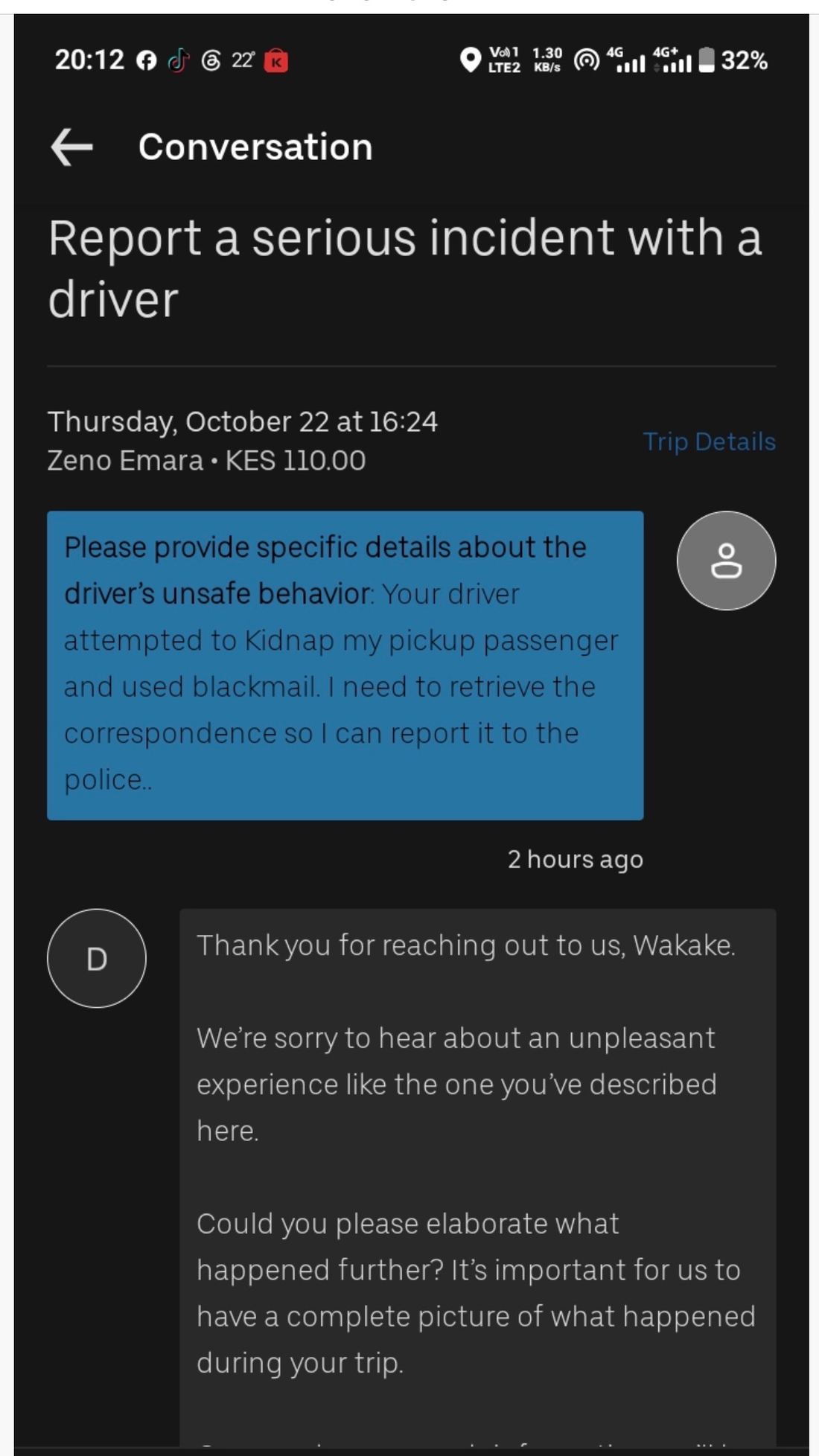
On Thursday, October 22, at 4:24 pm, I booked an Uber Electric Boda for a passenger in Nairobi. Within minutes, a routine trip became a roadside shakedown. The rider allegedly diverted her to an isolated spot and refused to take her on unless she paid extra cash.
She got home safely, but only after I intervened and threatened to call the police.
What happened next worried me almost as much: Uber's safety system did not respond like an emergency service.
I have since filed a formal complaint with Uber Kenya and copied the Law Society of Kenya's Public Interest and Litigation Directorate. This is what happened, and what it says about passenger safety on ride-hailing platforms in Kenya.
A trip that went off the map
The app matched us with a rider on a yellow electric motorcycle. His name and registration matched the profile shown on Uber. I have withheld both here while a police report is being processed.
According to my passenger, trouble began at pickup. The rider demanded a higher fare than the app had quoted. He threatened to abandon her if she refused.
After the trip began, he left the app's route. He took her to an isolated, unfamiliar location and stopped. There, she says, he blocked her from leaving and threatened to dump her unless she paid extra cash.
I intervened remotely and warned that the police would be called. Only then did he take her to the agreed drop-off point. She arrived shaken.
If these claims are proven, they could amount to extortion and unlawful confinement under Kenyan law. The rider has not been charged, and his side of the story is not yet known.
A form reply to a safety emergency
Right after the incident, I used the Uber Help Center option to report a serious incident with a driver.
The reply came from a support agent. It did not confirm that the rider had been suspended. It offered no emergency contact. Instead, it said Uber would watch for my response and asked me to give more detail before it acted.
Uber has also not handed over the GPS trip data or in-app chat logs. Police need these records to build a strong case. Without them, the passenger's account rests largely on her own word.
[Uber Kenya was contacted for comment. Add response or "had not responded by publication time."]
Analysis: who carries the risk?
Article 46 of Kenya's Constitution gives consumers the right to protection of their health, safety and economic interests. The Consumer Protection Act and the Competition Act's consumer provisions build on that right.
Ride-hailing apps sell more than transport. They sell trust: the promise that a vetted driver will follow a tracked route at an agreed price. When that promise fails, the platform's systems are the passenger's main protection.
This case exposes three gaps:
- Vetting. How are riders screened, and how fast are they removed after a credible safety complaint?
- Emergency response. A passenger at risk needs a live response, not a ticket queue.
- Evidence. Platforms hold the GPS and chat records. Victims cannot reach them without the company's help.
Boda boda trips add more risk. Passengers are exposed and have no doors to lock. Many riders also work beyond the reach of formal regulation.
What comes next
My complaint asks the authorities to act within their mandates. It seeks four things:
- Uber must release the GPS data, chat logs and rider records to police.
- The rider must be deactivated across ride-hailing platforms if the allegations are upheld.
- Uber Kenya's protocols for high-risk safety incidents must be reviewed.
- The LSK should guide the passenger as she records her statement with police.
A police report is being processed, and the OB number will follow. For now, one question remains for every rider in Nairobi: if your trip goes wrong, who is really on the other end of the app?
Filed underRogue, Uber, Ride, Kenya, Consumer, COFEK