Government Silent as Supermarket Shelves Run Low on Milk, Pushing Up Prices
Brookside, Tuzo and KCC have gone missing from some shelves entirely, and consumers online have reported a single 500ml packet climbing in price several times within one week.
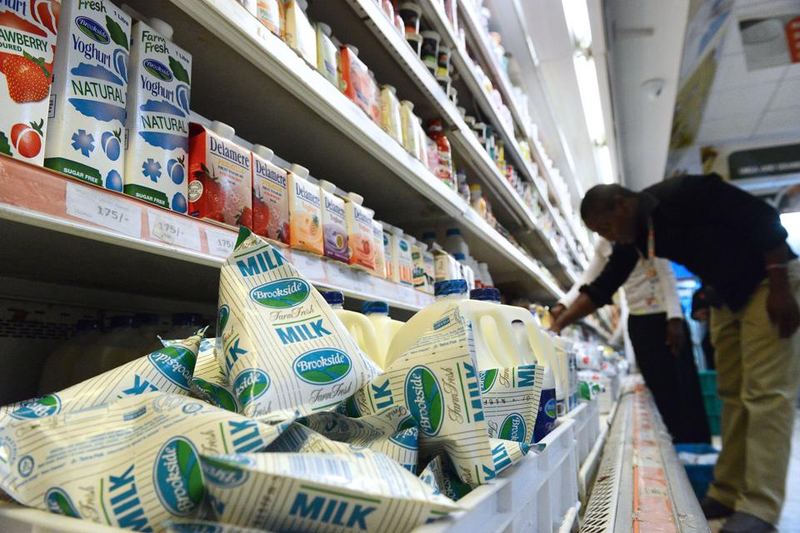
Nairobi’s supermarket shelves are emptying of milk. Prices are climbing by the week. And the government has said almost nothing about it. Milk prices have risen by between Sh4 and Sh12 across retail shops and supermarkets in the capital.
Retailers blame suppliers for cutting deliveries without explanation. One outlet said it had ordered 100 cartons and received only 24.
Others have shifted from instalment payment terms to cash-only orders, a sign that trust along the supply chain is breaking down. The pain is not confined to one chain. Shoppers at some supermarkets have been limited to two boxes of milk per visit.
At a Nairobi dairy outlet, a litre of fresh unpacketed milk has jumped from Sh70 to Sh80 in recent days.
Brookside, Tuzo and KCC have gone missing from some shelves entirely, and consumers online have reported a single 500ml packet climbing in price several times within one week. Why the shelves are empty: This is not a supply hiccup. It is the result of a drought squeezing dairy farmers from every direction.
National milk output hit a 22-month low in April 2026, after rainfall dropped by a fifth in key agricultural zones.
Farm-gate prices have risen sharply as a result, with some cooperatives now paying Sh55 a litre, up from Sh42 in December 2025. The real driver is feed. Kenyan dairy farming is roughly 70 percent dependent on feed costs, and with this year’s rains failing, fodder has become scarce and expensive.
A bale of Rhodes grass that cost Sh250 last year is now going for Sh450 in Nakuru and Kiambu.
Separately, the Association of Kenya Feed Manufacturers has recorded a 45-percent surge in feed costs, driven by scarcity of maize germ, soybean meal, canola and sunflower cake, most of it imported. The result is visible on farms. Smallholders, who produce nearly 80 percent of Kenya’s milk, have seen yields collapse from 7–9 litres per cow a day to just 4–5 litres.
Kenya Dairy Board has warned that farmers are now selling off productive cows because they can no longer afford to keep them alive.
That is a warning sign of a shortage that will outlast this month’s headlines. A herd sold off does not return with the next rains. Where is the government? Against this backdrop, the government’s public engagement has been thin and, at times, oddly targeted.
The most recent major intervention from Agriculture Cabinet Secretary Mutahi Kagwe was a nationwide crackdown on milk hawking, warning that unregulated raw-milk trade poses health risks and undermines the formal dairy sector.
That may be a legitimate long-term policy goal. It does nothing for a Nairobi household staring at an empty shelf and a Sh12 price jump today. There has been no comparable statement on the price surge itself. No word on whether the government will use the emergency-import window it has deployed in past shortages. No public timeline for when supply might normalise.
The Kenya Dairy Board has confirmed the crisis exists; it has not told consumers what, if anything, is being done to shield them from its cost. COFEK’s position: Consumers did not cause this drought, and they should not be left to absorb its full cost in silence.
COFEK calls on the Ministry of Agriculture and Livestock Development, and the Kenya Dairy Board, to: • Publicly confirm the scale of the current deficit and how long it is expected to last. • Consider a time-bound, transparent import window for UHT and powder milk, as has been used in previous shortages, with clear conditions to protect local farmers once supply recovers. • Fast-track duty relief on imported feed inputs, to slow the collapse in herd sizes now under way. • Direct retailers and processors to disclose the reasons for supply cuts to consumers, rather than leaving shoppers to guess.