Sh11.3bn Boeing Payout: A Lesson Kenya’s Consumer Law Still Refuses to Learn
compensation flowed from a manufacturer, not an airline. Boeing paid because US law let victims sue the plane-maker directly, in US courts, regardless of where the crash happened or where the airline was based.
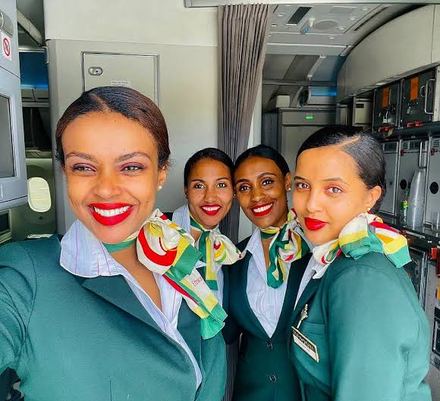
Thirty-two Kenyan families will each receive Sh2.73 million. This closes a seven-year fight for justice.
It compensation flowed from a manufacturer, not an airline. Boeing paid because US law let victims sue the plane-maker directly, in US courts, regardless of where the crash happened or where the airline was based. It follows the March 2019 crash of Ethiopian Airlines Flight 302. All 157 people on board died. Thirty-six were Kenyan. It was the deadliest single loss of Kenyan lives in aviation history. The payout sits inside a Sh187.7 billion global victims’ fund. Boeing set it up after admitting it misled US regulators over the 737 MAX’s flight-control software.
A separate Sh64.7 billion fund, split equally among all 346 victims of both MAX crashes, produced roughly Sh353 million per family in criminal-case compensation.
Civil claims for lost income, companionship and suffering came on top. Boeing must now also spend Sh58.9 billion on compliance and safety systems, under an independently monitored consent plan. The comparison: Strip away the size of the numbers, and three structural facts stand out. First, US victims got legal standing inside a criminal case. A federal court recognised the families as crime victims under the US Crime Victims’ Rights Act.
That gave them a seat at the table when prosecutors negotiated Boeing’s plea deal. Kenya has no equivalent statute.
A Kenyan victim of corporate negligence has no comparable right to participate in, or challenge, a prosecutor’s settlement with the company that harmed them. Second, the US Department of Justice enforced a compliance breach. In May 2024, it found Boeing had violated its 2021 non-prosecution agreement. That finding is what forced the fresh payout now reaching Kenyan families.
Kenya’s regulators rarely revisit a settlement once signed. Consent orders and out-of-court deals here tend to be final, whatever happens afterward. Third, compensation flowed from a manufacturer, not an airline. Boeing paid because US law let victims sue the plane-maker directly, in US courts, regardless of where the crash happened or where the airline was based.
Kenyan consumers harmed by a foreign manufacturer’s defective product have no such direct route. They are left to chase local agents, distributors or insurers, who often carry a fraction of the manufacturer’s liability. What Kenya has instead: Kenya’s Consumer Protection Act, 2013 has no product-liability chapter of comparable force.
Redress runs through the Small Claims Court or ordinary civil suits, both slow and capped in reach.
The Kenya Civil Aviation Authority regulates safety. It does not run a victims’ compensation scheme.
When a Kenyan dies or is injured through corporate negligence abroad or through a multinational’s product, the family’s leverage depends almost entirely on foreign courts having jurisdiction, and on foreign lawyers being willing to take the case on contingency, as happened here. COFEK’s position: This settlement is a rare case where multinational accountability actually reached ordinary Kenyan families. It happened because of US law, not Kenyan law.
That is the uncomfortable comparison. A Kenyan family injured by a defective product sold in Kenya, by a company with no US footprint, would have none of these protections.
COFEK calls on Parliament to: • Enact a standalone product liability law, fixing strict liability on manufacturers and their local agents alike. • Grant crime victims formal participation rights in regulatory and prosecutorial settlements, mirroring the US model. • Empower sector regulators to reopen and enforce compliance failures after a settlement, not just at the point of signing.
Kenyan families should not need a US courtroom to get justice for harm suffered on Kenyan soil. Sh11.3 billion has now reached 32 of them.
The next Kenyan family harmed by corporate negligence deserves a law that does not depend on where the wrongdoer happens to be headquartered. Ends