The $419 Million Question: Who Is GKSD, and What Did Kenya Just Sign Up For?
a private joint venture between two entities: GK Investment Holding, founded and chaired by Tunisian-Italian businessman Kamel Ghribi, and Gruppo San Donato (GSD), Italy's largest private hospital operator. GK Investment Holding's origins have nothing to do with healthcare — it began as a commodity-trading and consultancy outfit dealing in oil, cotton, phosphates and coffee, before pivoting into healthcare infrastructure.
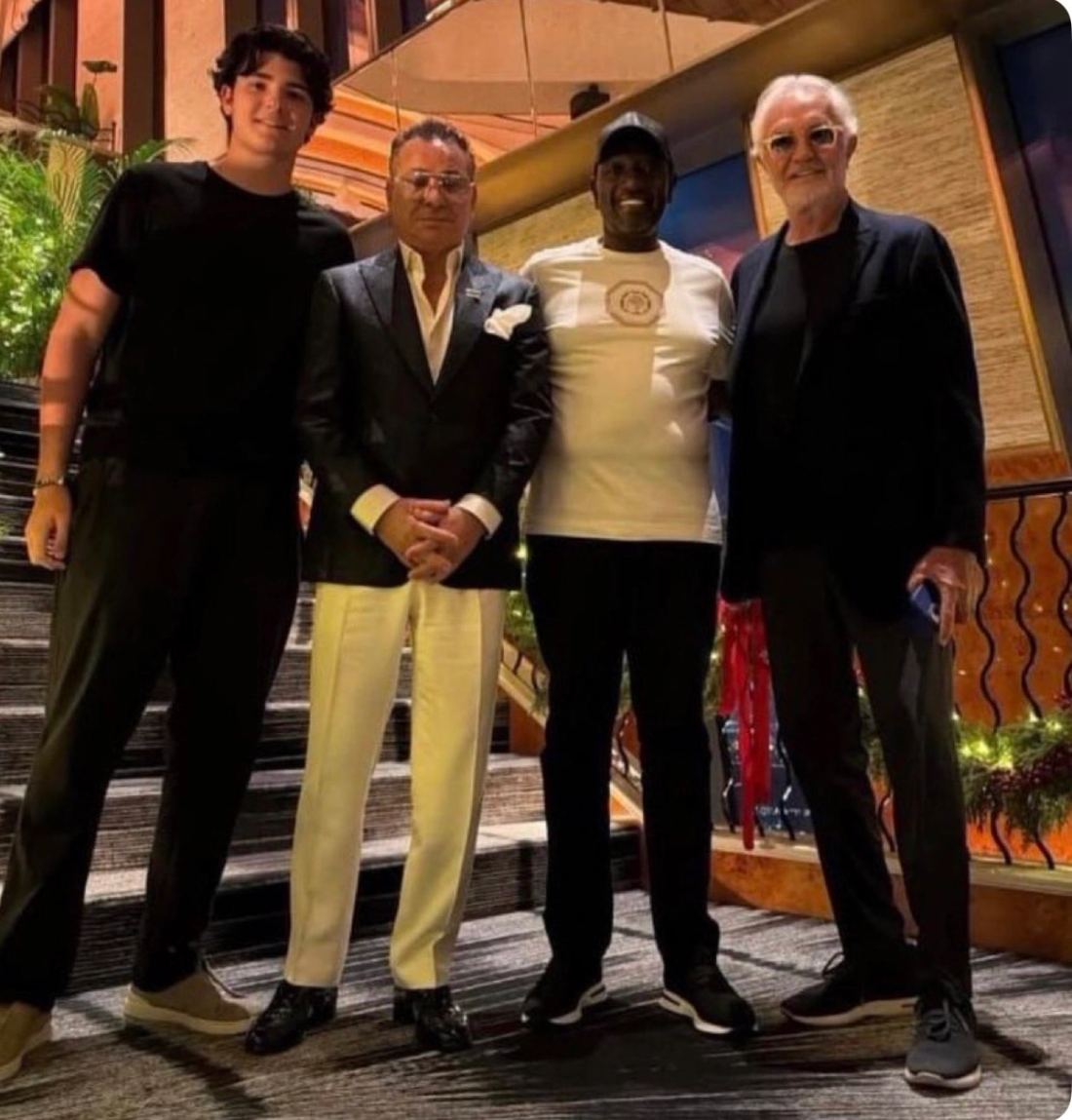
On September 8, 2026, President William Ruto stood at State House Nairobi and witnessed the signing of what was billed as a landmark step toward Universal Health Coverage — a $419 million agreement with an Italian firm called GKSD Group to build 15 hospitals across 15 counties.
The announcement carried all the theatre of a state affair: flags, handshakes, promises of "a better healthcare system for Kenyans." But strip away the ceremony, and a set of uncomfortable questions remain unanswered.
Who exactly is GKSD? Why was the groundwork for this deal laid in a Dubai hotel eight months earlier, off the record and off the President's official schedule? And what, precisely, has Kenya committed to give up in return? GKSD Is Not a Government Agency — It's a Private Joint Venture
Despite the government-to-government theatre of the signing, GKSD is not an arm of the Italian state.
It is a private joint venture between two entities: GK Investment Holding, founded and chaired by Tunisian-Italian businessman Kamel Ghribi, and Gruppo San Donato (GSD), Italy's largest private hospital operator. GK Investment Holding's origins have nothing to do with healthcare — it began as a commodity-trading and consultancy outfit dealing in oil, cotton, phosphates and coffee, before pivoting into healthcare infrastructure.
Gruppo San Donato is, at its core, a family business. Ownership sits with Giulia Rotelli, Marco Rotelli and Paolo Rotelli (roughly 17% each) and Gilda Maria Castaldi (about 23.5%), according to GKSD's own corporate disclosures.
Ghribi does not own equity in GSD directly but holds a vice-presidency and board seats across the group's holding entities. In other words: Kenya did not sign a hospital-building pact with the Italian government. It signed one with a private family-owned hospital chain and its Tunisian-Italian investment partner — dressed in the language and optics of a state deal.
How a Private Firm Got a State House Signing Ceremony The deal didn't arrive through GKSD knocking on Kenya's door. It rode in on the back of Italy's Mattei Plan for Africa — Rome's flagship Africa strategy, now covering 18 partner countries and 76 projects, backed by an initial €5.5 billion in public financing.
Kenya is listed as a priority partner under the plan, which means the Italian government actively uses its diplomatic and financing channels to open doors for private Italian companies. GKSD walked through one of those doors. The agreement was formally signed at State House Nairobi as a tripartite arrangement between the Government of Kenya, the Italian Republic, and GKSD Investment Group.
The Dubai Meeting Nobody Explained Eight months before the cameras rolled at State House, President Ruto was in Dubai — quietly. On the night of January 6, 2026, Italian billionaire and former Formula One boss Flavio Briatore posted an Instagram photo from his Dubai venue, Lion in the Sun, showing himself hosting Ruto alongside Kamel Ghribi — the same Ghribi who now chairs GKSD.
Briatore captioned it: welcoming "prestigious guests, President of Kenya William Ruto and entrepreneur Kamel Ghribi."
The trip was never announced. Ruto's official public schedule for that period placed him in Kenya. No State House statement confirmed the visit before or after Briatore's post surfaced it.
Indeed one media house cross-referenced flight-tracking data showing a private jet making unusual Nairobi-Dubai hops in the days leading up to the dinner. State House has, to date, not publicly addressed the trip.
Eight months later, Ghribi's company signed a $419 million hospital deal with Ruto's government. That timeline is a matter of public record, not speculation. What it establishes is a documented lack of transparency around how this deal originated — not evidence, on its own, of personal financial interest on the President's part.
No reporting to date alleges the latter. But the gap between an undisclosed private dinner and a state-witnessed signing ceremony eight months later is exactly the kind of gap that public accountability mechanisms — parliamentary questions, access-to-information requests on the January travel, disclosure of who initiated the talks — exist to close.
Right now, nobody has asked those questions on the record, let alone answered them.
What's Actually Been Signed — and What Hasn't Publicly available details of the agreement are notably thin: ✅15 hospitals across 15 counties — 13 Level 5 county referral hospitals and two Level 6 national teaching/referral facilities. ✅Valued at approximately US$419 million. ✅Facilities are expected to carry a minimum of 16 ICU beds and 10 high-dependency beds each
✅Financing arrangements and regulatory processes are still to be completed before construction can begin. Crucially, what was signed is described in Italian coverage — Il Sole 24 Ore, ANSA, AGI, Italpress — as a "Lettera di Intenti": a Letter of Intent, not a binding construction contract.
GKSD's own statement acknowledges that Kenya's government still has to complete financing arrangements and regulatory processes before a single brick is laid.
That distinction matters. A Letter of Intent is a framework, a statement of political will — not a costed, contractually binding commitment. The commercial terms, financing structure, and each party's obligations are, by definition, still being negotiated. The Question COFEK Wants Answered: What Is Kenya Giving Up? Here is where the public record goes silent. Neither Italian nor Kenyan coverage of the signing discloses what Kenya is offering GKSD in return for this investment.
No mention of land grants, tax holidays, sovereign guarantees, or county-level concessions has surfaced in any official announcement.
That silence is not necessarily sinister — it is consistent with this being an unfinalized Letter of Intent rather than a signed Public-Private Partnership contract, where such terms would normally be spelled out in a gazetted agreement.
But Kenya's history with hospital and infrastructure PPPs is instructive: past arrangements have typically involved land provided by county governments and duty exemptions on imported medical equipment. Whether this deal follows that pattern is currently unknown — and unknowable — until the underlying agreement is made public. COFEK's position is simple: Kenyans deserve to see the actual terms before, not after, financing arrangements are finalized. A $419 million commitment against public health infrastructure — involving land, potential tax concessions, and long-term operational control of referral hospitals — is not a matter that should be settled by press statement and photo-op.
Can GKSD Actually Deliver? The Money Behind the Name: To its credit, Gruppo San Donato is not a shell operation. It traces its roots to 1957, when physician Luigi Rotelli founded the Istituto di Cura Città di Pavia, and has grown — through his son Giuseppe and now grandson Paolo Rotelli — into Italy's largest private hospital network: roughly 18-19 hospitals, over 5,000 beds, and about 4.7 million patients treated annually, concentrated in Lombardy.
Former Italian Foreign Minister Angelino Alfano currently serves as President, with Paolo Rotelli and Kamel Ghribi as Vice Presidents. Financially, GSD reported €2.7 billion in revenue and €380 million in EBITDA for 2025. In January 2024 it engaged Morgan Stanley to explore an IPO or partial sale, and by early 2025, CVC Capital Partners had reportedly emerged as the frontrunner to acquire a 30-40% stake for €2-3 billion — implying an enterprise valuation somewhere in the €6-9 billion range, with Advent, Apollo, EQT, KKR and HIG also said to have circled the asset.
In October 2025, GSD raised €720 million in financing facilities and issued €800 million in Senior Secured Notes through Rothschild, BNP Paribas, UniCredit and Intesa Sanpaolo, among others.
On paper, a group that size, with that kind of recent access to debt markets, looks financially capable of funding — or leveraging financing for — a $419 million commitment. It is, after all, a fraction of what GSD has already raised once for unrelated purposes. The financial capacity is not the question mark here. The transparency of the arrangement is. Who Are the Kenyan Beneficiaries? Nobody Knows — Yet Perhaps the most glaring gap in the public record: no Kenyan shareholder, director, or beneficial owner has been named in connection with GKSD, GK Investment Holding, or Gruppo San Donato — not on GKSD's own website, not in Italian corporate press, not in Kenyan coverage of the signing.
It remains entirely possible — even likely, given how such infrastructure deals are typically structured — that a Kenyan-registered special-purpose vehicle will be set up to execute this specific project locally.
If it has been, it isn't yet reflected in any public reporting. That detail would only surface through Kenya's Business Registration Service (BRS) beneficial-ownership register, and given the signing happened only days ago, such a filing — if it exists — has not yet become visible in press coverage. COFEK will be watching that registry closely.
Filed underGKSD, Italy, Kenya, Health, Deal, Hospitals, Consumer, COFEK