Why a Group is Opposed to the Sh500 Billion Nuclear Plant in Siaya
The agency has shortlisted eight sites in Siaya County — Ugambe, Sirongo, Liunda, Manywanda, Osindo, Nyangoye, Dagamoyo and Kanyawayaga — all along the Lake Victoria shoreline, from which a “Proposed Site” and an “Alternate Site” are to be selected after further screening.
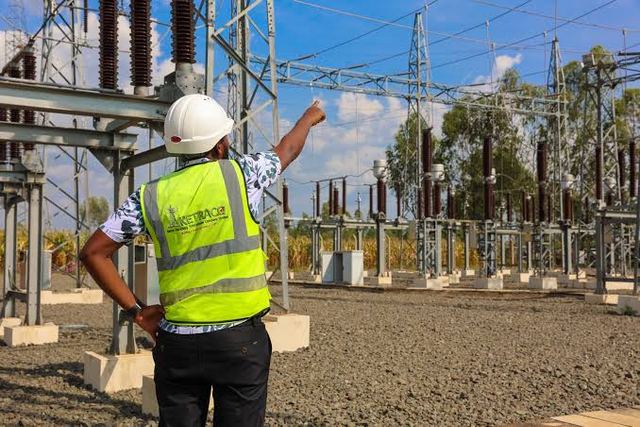
A planned Sh500 billion ($3.9 billion) nuclear power plant on the shores of Lake Victoria has run into determined resistance from a section of professionals and residents in Siaya County, reopening hard questions about consent, transparency and the true cost of Kenya’s nuclear ambitions.
The Project The Nuclear Power and Energy Agency (NuPEA) is pushing the plant as the anchor of Kenya’s nuclear energy programme, intended to deliver stable baseload power for industrialisation and to advance Vision 2030 goals.
NuPEA has told the Senate that the project could create between 5,000 and 12,000 jobs, and government projections put eventual output at between 1,000 and 3,000 megawatts. The agency has shortlisted eight sites in Siaya County — Ugambe, Sirongo, Liunda, Manywanda, Osindo, Nyangoye, Dagamoyo and Kanyawayaga — all along the Lake Victoria shoreline, from which a “Proposed Site” and an “Alternate Site” are to be selected after further screening. Notably, Siaya was not NuPEA’s first choice. The plant was originally earmarked for Uyombo in Kilifi County, but was relocated after fierce opposition from coastal residents, environmental groups and local leaders.
A NuPEA board member has since said the agency settled on Siaya partly because of favourable climate conditions and economic viability, but also because political support there was notably stronger than in Kilifi.
A senior NuPEA engineer reportedly went further in a March interview, conceding that the shift to Siaya was driven in part by political considerations rather than purely technical ones.
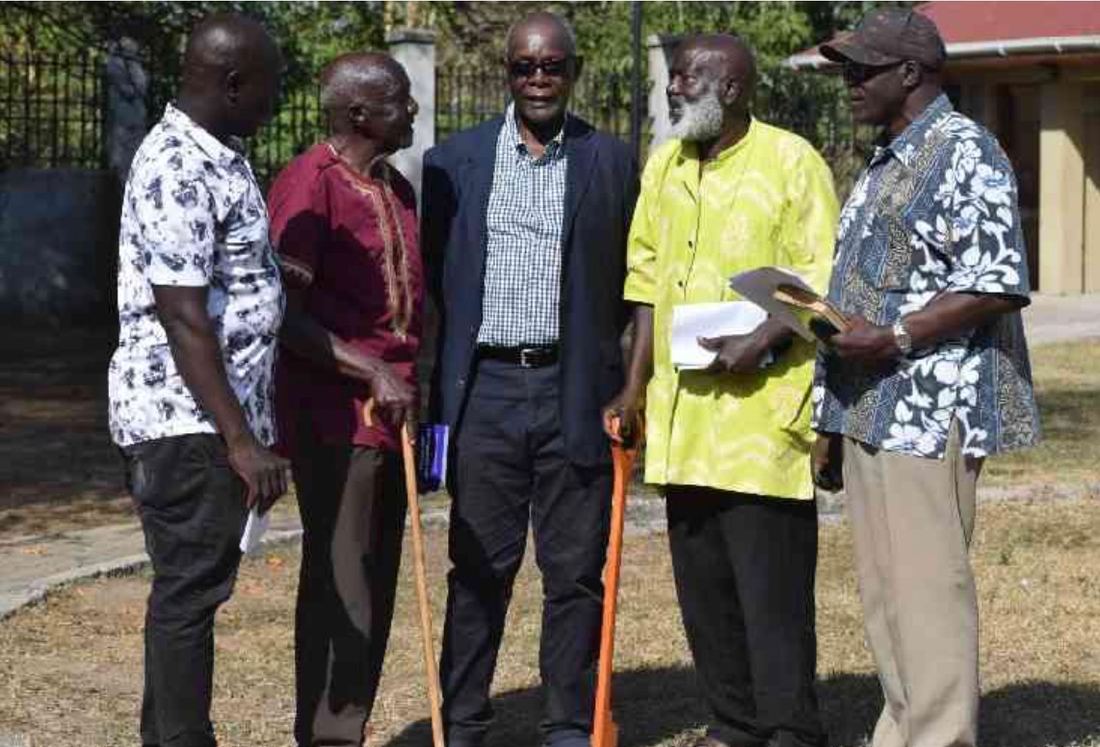
Why the opposition? A group of professionals organised under the banner Concerned Citizens of Kenya, addressing journalists at the Tom Mboya Mausoleum in Rusinga Island, rejected the plant outright — citing health, environmental and consent concerns rather than opposition to nuclear power in principle.
Their case rests on four main pillars: ✅Public health risk. The group warns the project may trigger elevated cancer risk and long-term damage to the heart, lungs, thyroid, brain and immune system among residents living near the plant. ✅Pollution of Lake Victoria. Concerned Citizens of Kenya Co-ordinator Prof. Medo Misama argues the plant will pollute the lake, exposing communities to nuclear-waste-related illness. “Lake Victoria is the main source of livelihood for our people and livestock. Pollution of water in Lake Victoria will have a horrendous impact on our lives as a people and our livestock,” he said. ✅Livelihoods. Lake Victoria sustains fishing and small-scale farming for the surrounding population. The lake supports more than 200,000 fishing families across the region, and is already under severe ecological stress — a burden residents fear the plant’s cooling-water discharge will worsen. ✅A pattern, not a one-off. The professionals’ rejection echoes wider grassroots resistance that has built up in Siaya since May 2026, when residents of Sakwa in Bondo Sub-county took to the streets carrying placards and chanting anti-nuclear slogans, citing environmental safety, public health and a lack of community consultation. Transparency deficit The professionals’ intervention is not an isolated protest — it sits inside a wider, hardening standoff between NuPEA and Siaya communities that has escalated through 2026:
✅Following the May protests, NuPEA pledged “deep, village-level grassroots sensitisation” and CEO Justus Wabuyabo assured residents that no infrastructure would proceed without their broad, informed consent. ✅Appearing before the Senate Energy Committee, Wabuyabo maintained that construction would not begin until environmental, social and safety requirements were met, and that the International Atomic Energy Agency would not permit construction otherwise. A civil society lobby nonetheless told the state not to impose the plant on Siaya, arguing the government’s public participation had violated constitutional and democratic rights. ✅Most seriously, Greenpeace Africa has pointed out that NuPEA’s own 2023 assessment reportedly ruled out the Lake Victoria region on geological grounds — yet the project was sited there anyway. The organisation is demanding NuPEA publish its full environmental, seismic and resettlement records.
✅By August, the standoff had produced arrests: eighteen people — including a single mother, artisanal miners, boda boda riders and at least one child — were detained over peaceful opposition to the project, one of them a day after his coalition filed a formal Access to Information request for the project’s safety and resettlement records. COFEK’s Position For the Consumers Federation of Kenya, this dispute is fundamentally a consumer and citizen-rights issue, not merely a technical energy debate. Kenyans — as taxpayers funding a Sh500 billion outlay and as consumers of the electricity, food and water the Lake Victoria basin sustains — are entitled to:
1. Full disclosure of NuPEA’s site-selection science, including the 2023 assessment Greenpeace says excluded the Lake Victoria basin, before any “Proposed Site” is designated.
2. Genuine, not cosmetic, public participation, as guaranteed under Article 10 of the Constitution — participation that precedes major decisions, not sensitisation campaigns launched only after protests erupt.
3. Independent environmental and health impact assessments, made public in full, addressing the specific cancer, water-pollution and livelihood concerns raised by both professionals and residents.
4. Restraint from criminalising dissent. Citizens and civil society raising legitimate safety questions — including through lawful Access to Information requests — should not face arrest.
A nuclear programme built on coercion rather than consent is not a foundation Kenyans can trust with their health, their largest freshwater lake, or half a trillion shillings of public money.
COFEK will continue to monitor NuPEA’s site-selection process and will not hesitate to pursue public interest action should due process, transparency or constitutional participation rights be short-circuited in Siaya.
Filed underNuclear, Plant, NuPEA, Environment, Pollution, Greenpeace, COFEK