COFEK calls on the Ministry of Agriculture, Treasury and the Dairy Board to to Restore Milk Supply and Stabilize Prices
Formal sector milk intake fell from 88.89 million litres in May 2026 to 84.44 million litres in June 2026 — a month-on-month decline of 5.0 per cent [KNBS, Leading Economic Indicators, June 2026, Table 17(f)]. The June 2026 intake was 6.4 per cent below the 90.24 million litres recorded in June 2025. February 2026 (74.43 million litres) was in fact the lowest month so far this year, pointing to a volatile and weakening supply trend through H1 2026
The Consumers Federation of Kenya (COFEK) is deeply concerned by the continuing decline in formal milk intake and the resultant strain on retail milk prices, and calls on the Ministry of Agriculture, the Kenya Dairy Board (KDB) and the National Treasury to take immediate, coordinated measures to restore normal supply and price levels.
What Data Shows
Formal sector milk intake fell from 88.89 million litres in May 2026 to 84.44 million litres in June 2026 — a month-on-month decline of 5.0 per cent [KNBS, Leading Economic Indicators, June 2026, Table 17(f)]. The June 2026 intake was 6.4 per cent below the 90.24 million litres recorded in June 2025. February 2026 (74.43 million litres) was in fact the lowest month so far this year, pointing to a volatile and weakening supply trend through H1 2026, even though cumulative January–June 2026 intake (513.32 million litres) remained broadly flat against the same period in 2025 (516.34 million litres).
This official data does not support claims in some public commentary as attributed to the President’s Economic Advisor Dr David Ndii, that milk supply is currently expanding. Consumers are entitled to a clear, evidence-based account of the true state of the sector.
Reality on the Ground
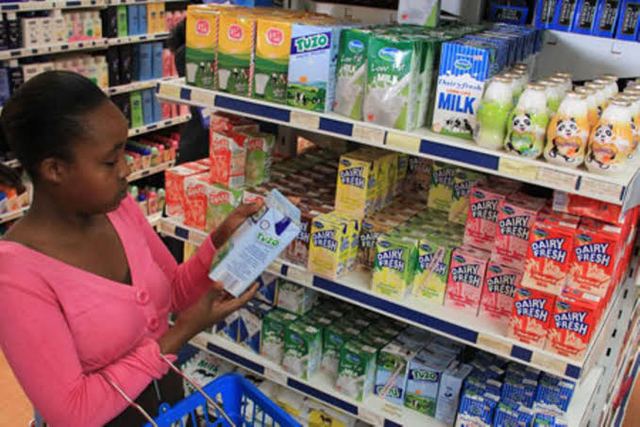
Nairobi retailers have begun rationing milk purchases, with fresh milk prices at outlets such as Waithaka Dairy Centre rising from KSh 70 to KSh 80 per litre. Branded packaged milk has become intermittently scarce on supermarket shelves. At the same time, smallholder farmers — who supply roughly 80 per cent of Kenya's milk — report yields falling from 7–9 litres to 4–5 litres per cow per day, driven by poor pasture following delayed rains and a roughly 45 per cent rise in commercial feed costs. Kenya Dairy Board has itself acknowledged that farmers could be exiting dairy production, selling off cows they can no longer afford to feed.
A Policy Failure COFEK Cannot Ignore
This shortage was foreseeable and, in material part, avoidable. New KCC and the Kenya Dairy Board did not adequately mop up the milk surplus recorded in 2025, and the milk powder from that surplus was not built into the country's strategic food reserves as had been anticipated. Had these buffers been in place, today's supply shock would have been substantially cushioned.
COFEK Demands
Given the prevailing situation, COFEK hereby demands as follows;
- (a) Ministry of Agriculture: Publish, within 7 days, a transparent recovery plan with monthly milk-intake targets, and immediately activate emergency fodder and feed-subsidy support for affected dairy counties.
- (b) Kenya Dairy Board: Account publicly for the disposition of the 2025 milk surplus and the status of milk powder reserves; and institute a standing surplus-absorption and strategic reserve mechanism to prevent recurrence.
- (c) National Treasury: Waive import duty and VAT on yellow maize, soya and other key dairy-meal inputs with immediate effect, to lower feed costs and stem the exit of dairy farmers.
- (d) All three bodies, jointly: Institute active retail price monitoring to deter opportunistic price gouging and rationing, and issue fortnightly public updates on intake, price and reserve levels until the crisis is resolved.
COFEK will closely monitor compliance and reserves the right to pursue further advocacy and legal action should these urgent measures not be actioned within the stipulated timelines. Thank you.
Stephen Mutoro
Secretary-General, Consumers Federation of Kenya (COFEK)
Filed underMilk, Shortage, Crisis, Kenya, COFEK. COFEK, Supermarkets