Kibera Laini Saba: Thirteen years, a World Bank loan and a resettlement still unfinished
Kenya Railways blames subletting and political goons for the Kibra housing mess. The numbers point to a bigger failure: a public project that ran out of money, time and accountability long before it ran out of tenants.
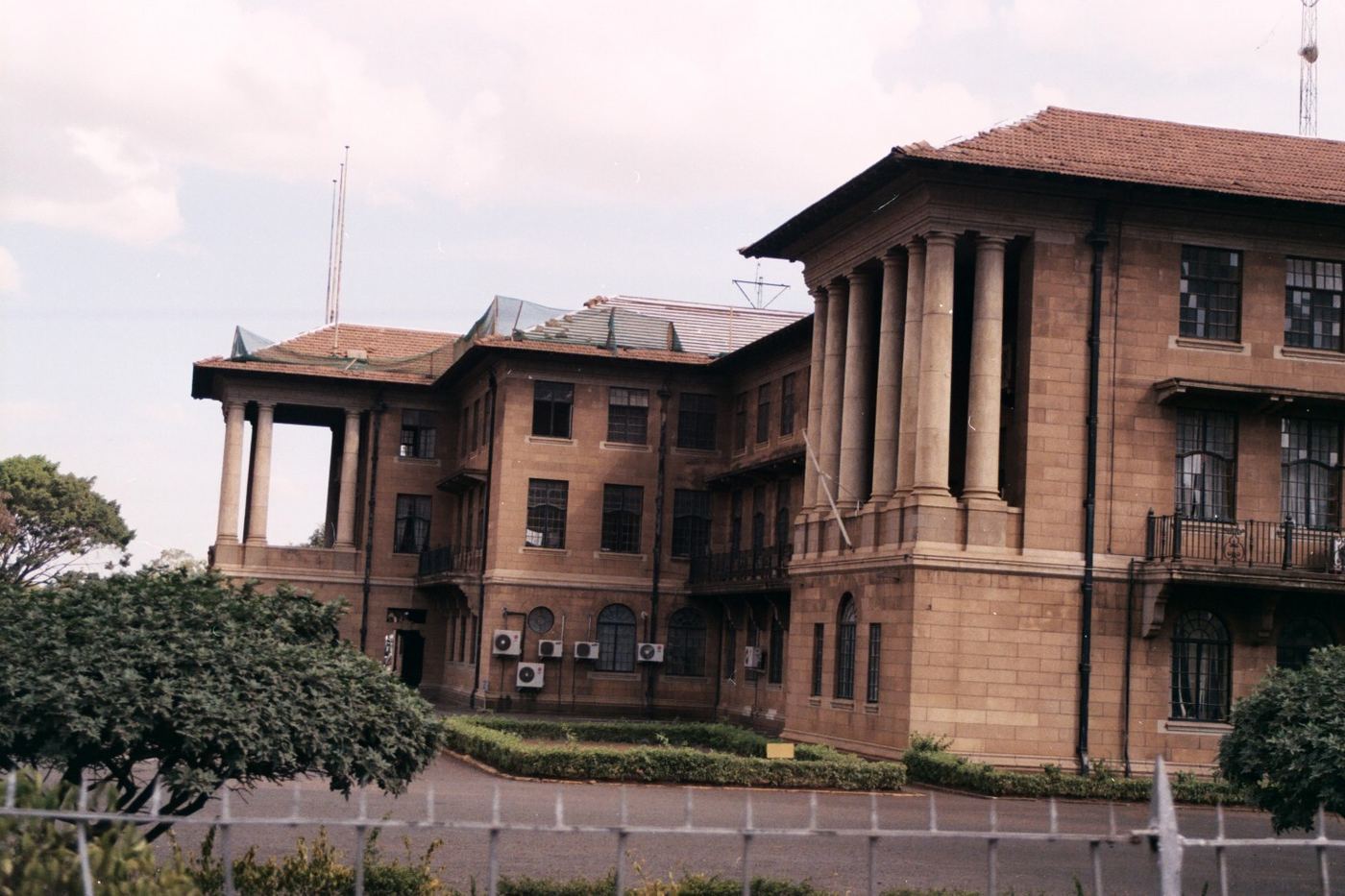
Kenya Railways has told senators that occupants of 229 houses at Laini Saba in Kibra are squatting on public property and subletting the units for as much as Sh20,000 a month, while paying the corporation nothing against an official rent of Sh1,000.
Managing Director Philip Mainga, appearing before the Senate Standing Committee on Roads, Transportation and Housing chaired by nominated Senator Hamida Kibwana, said attempts to remove the occupants had been frustrated by political interference and by youths allegedly mobilised by local politicians.
The accusation came in response to a petition by residents and traders displaced by railway works, who say the resettlement they were promised has left most of them without houses, without stalls, or with structures that are barely usable. Both stories can be true at once. And that is precisely the problem.
What petitioners say
Petitioner Victor Wamae told the committee that of 1,432 residential occupants enumerated in Laini Saba, only 256 have received houses. Of 833 business occupants identified, 583 have received stalls. Some completed houses, he said, have no water or sewer connection, leaving toilets unusable and, in some cases, converted into living space.
Petitioners also complained that some houses remain incomplete and that certain stalls are too small or badly located for trade.
Beyond Laini Saba, the petitioners pointed to the stalled Phase Two construction at Jamhuri, behind the Nairobi City County Inspectorate Trading Centre, and to traders who won allocation ballots but were left stranded at the Magade decanting site after the project ran out of funds.
What Kenya Railways says
Mr Mainga defended the units, saying residents were consulted throughout construction and that civil servants also live in them. He traced the programme to the Kibera and Mukuru Resettlement Action Plan, launched in 2013 under the World Bank-funded East Africa Trade and Transport Facilitation Project.
The plan targeted 4,380 homes and 3,445 business units, together with roads, sanitation, footbridges, schools and garages.
The World Bank credit period expired on 30 September 2015, when the corporation says the project was about 85 per cent complete. By 2020, 3,037 residential units and 1,990 business units had been finished. The government subsequently advised that the project be closed because budget allocations were not enough to complete the remainder.
Kenya Railways also blamed court disputes filed by the contractor for delaying the Laini Saba relocation houses, and said it is now working with the State Department for Housing and Urban Development to finish stalled units and explore additional housing under the social housing programme.
Maths of a broken promise
Set side by side, the figures tell a harsher story than either side presented. At Laini Saba, roughly 82 per cent of enumerated households, about 1,176 families, are still waiting for the houses on which their displacement was premised. Three in ten traders, 250 businesses, are still waiting for stalls.
Across the wider programme, the 3,037 homes completed by 2020 represent about 69 per cent of the 4,380 targeted, and the 1,990 business units about 58 per cent of the 3,445 planned. That sits uneasily beside the corporation’s claim that the project was 85 per cent complete when the World Bank money ran out. If the 85 per cent refers to expenditure or civil works rather than delivered units, Kenya Railways owes Parliament that clarification, because for a displaced family the only measure that matters is a key to a finished house.
Then there is the subletting claim itself. If 229 units are occupied by people not entitled to them, and only 256 enumerated households at Laini Saba have been housed, the allocation register deserves as much scrutiny as the occupants. Who issued the keys? On what list? Who has been collecting the alleged Sh20,000 a month? At the upper figure, 229 units sublet at a Sh19,000 premium over official rent would generate more than Sh4.3 million a month, over Sh52 million a year, flowing outside any public account. That is not petty squatting; it is a parallel rental economy operating on public land.
11 years after the money stopped
The deeper failure is time. The donor credit lapsed in 2015. It is now late 2026. For eleven years, the State has neither completed the project nor formally reconciled what was promised against what was delivered. Families removed from the railway reserve in the name of safety and regional trade have spent more than a decade in temporary sites, with some traders operating near roads and the very railway tracks the project was meant to clear.
Kenya Railways is right that encroachment within the 60-metre railway reserve endangers lives and forces trains to crawl through Kibra at low speeds, undermining the commuter and freight service the World Bank loan was meant to improve. But a reserve cleared without completed resettlement simply moves risk from the track to the roadside. The public paid for a loan; it has not yet received the outcome.
Evictions are not a shortcut
Marsabit Senator Mohammed Chute told the committee that senators would work with police to evict illegal occupants and hand houses to eligible beneficiaries, arguing that a few individuals should not deprive genuine residents. The sentiment is understandable. The method needs care.
Any removal must comply with the Constitution and the eviction procedures in the Land Act, including adequate notice, verification of who is in occupation, humane conduct and access to remedies, principles the Supreme Court reaffirmed in Mitu-Bell Welfare Society v Kenya Airports Authority. A police operation launched before the list is verified risks punishing the wrong households, including subtenants who may themselves be among the displaced, while leaving untouched whoever profited from the allocations.
Projects financed under World Bank involuntary resettlement policy are also supposed to leave affected people no worse off than before displacement. Thirteen years in, for more than a thousand Laini Saba households, that standard has plainly not been met.
What the Senate should demand
The committee has rightly asked Kenya Railways for a list of occupants to establish who qualifies to remain and who should leave, and Senator Kibwana has said members will visit the sites before acting. That visit should be the start of an audit, not a prelude to evictions. At a minimum, senators should require:
First, the original 2013 enumeration register for Laini Saba and the full allocation list, reconciled unit by unit against current occupants. Second, an explanation of how 229 units came to be occupied by people the corporation now calls illegal, and by whose authority keys were issued.
Third, a costed completion plan with dates for the remaining houses, the Jamhuri Phase Two works and the stranded Magade traders, including water and sewer connections for units already handed over. Fourth, the status and cost of the contractor litigation blamed for delays. Fifth, an account of the World Bank funds disbursed, the reconciliation of the 85 per cent completion claim, and whether any undisbursed or reallocated funds remain recoverable.
Kenya Railways wants the story to be about rogue occupants and political goons. The petitioners want it to be about broken promises. The record shows a project that displaced thousands, delivered a fraction, and was quietly shelved when the money ran out, leaving a vacuum that profiteers and politicians have been happy to fill. Evicting 229 households will not fix that. Finishing what the State started, and naming those who allowed it to rot, will.
Filed underKenya, Railways, World, Bank, Kibera, Laini, Saba, Nairobi, Cofek